
NATGAS Under Pressure Amid Increasing Risk of Super El-Nino IN 2026
- April 6, 2026
- Posted by: Today Markets
- Categories: Competitive research, Funding trends, Markets, Technical Analysis
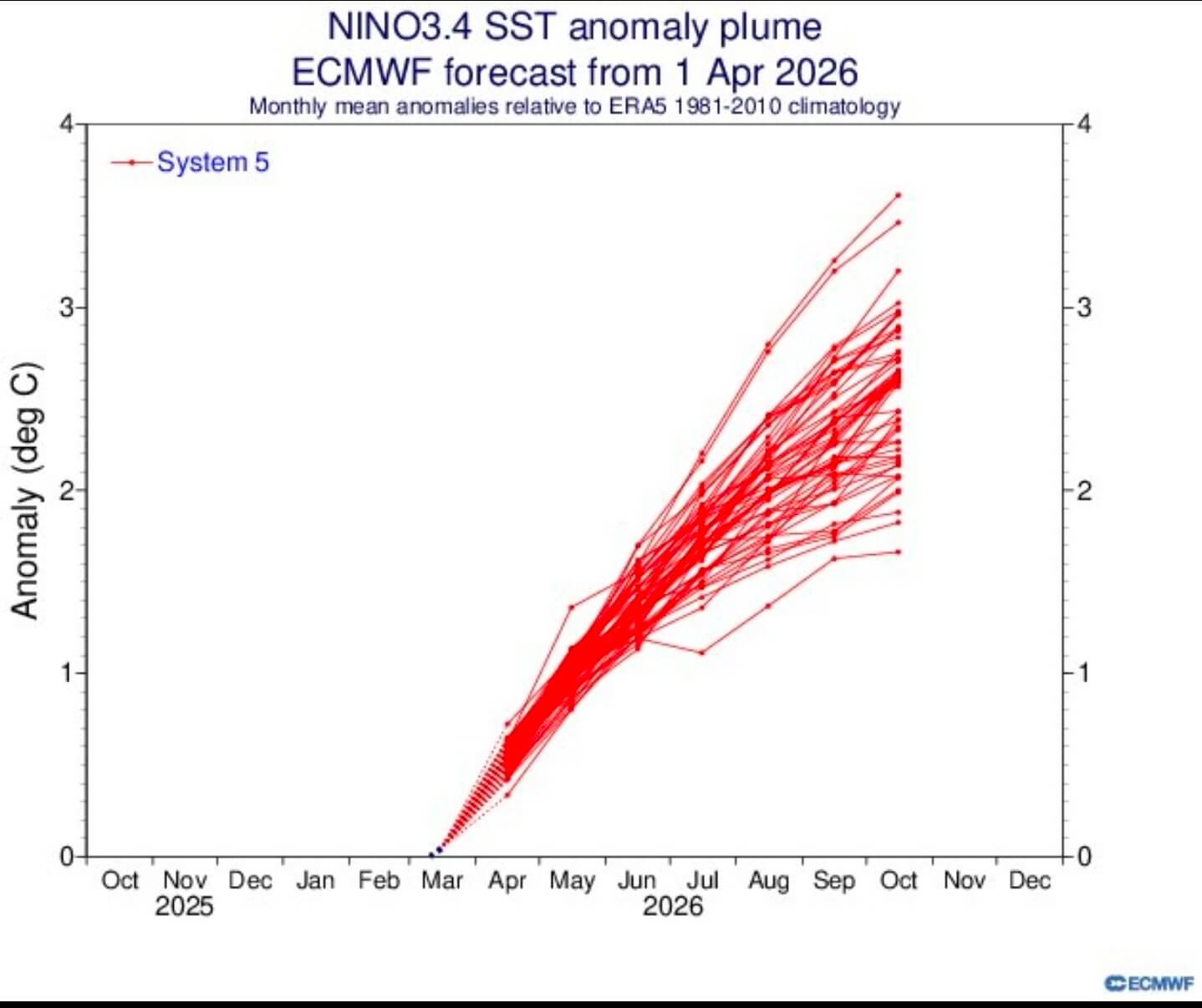
Forecasts point to an exceptionally strong El Niño in 2026, with sea surface temperatures potentially rising by as much as ~2.5°C, placing this episode on par with—or even exceeding—historic events such as 1997–98 and 2015–16. Such a scenario implies significant shifts in global weather patterns, including milder winter conditions and reduced summer temperature volatility in the United States. From a natural gas market perspective, the key implication is higher storage levels and weaker energy demand during the spring–summer period. As a result, the market environment becomes fundamentally bearish for US gas prices, especially given already subdued seasonal demand (limited heating and softer cooling demand).
- Models are nearly unanimous in projecting strong warming in the Niño 3.4 region by autumn 2026, increasing confidence in a very strong El Niño scenario.
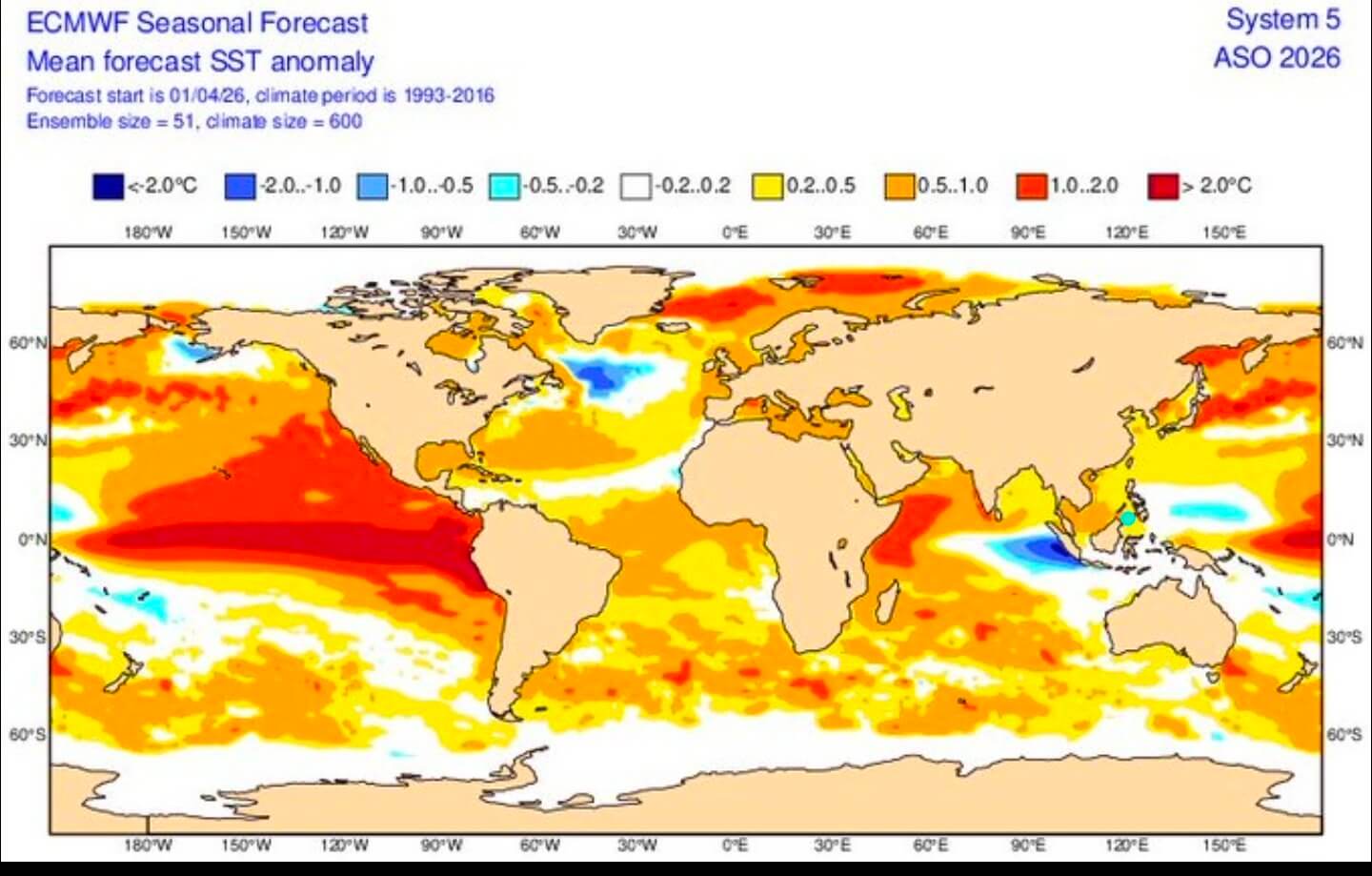
- Sea surface temperature anomalies exceeding +2.0°C across the equatorial Pacific point to a broad and persistent disruption in atmospheric circulation.
- In practice, this translates into a warmer winter in North America, leading to weaker heating demand and higher end-of-season gas storage levels.
- Entering spring with elevated inventories places the gas market in an oversupplied phase, which historically translates into price weakness during the shoulder season.
- During summer months, El Niño tends to limit the frequency and intensity of extreme heat in parts of the US, reducing electricity demand and gas burn in power generation.
- At the same time, it suppresses Atlantic hurricane activity, lowering the risk of supply disruptions in the Gulf of Mexico.
- This reduces the weather risk premium that typically supports gas prices during the summer season.
- Strong precipitation anomalies—drought in Indonesia and northern Australia alongside excessive rainfall in the equatorial Pacific—confirm the scale and global reach of the climatic disruption.
- From a valuation standpoint, the pace of storage injections in spring and their deviation from the five-year average remain critical variables.
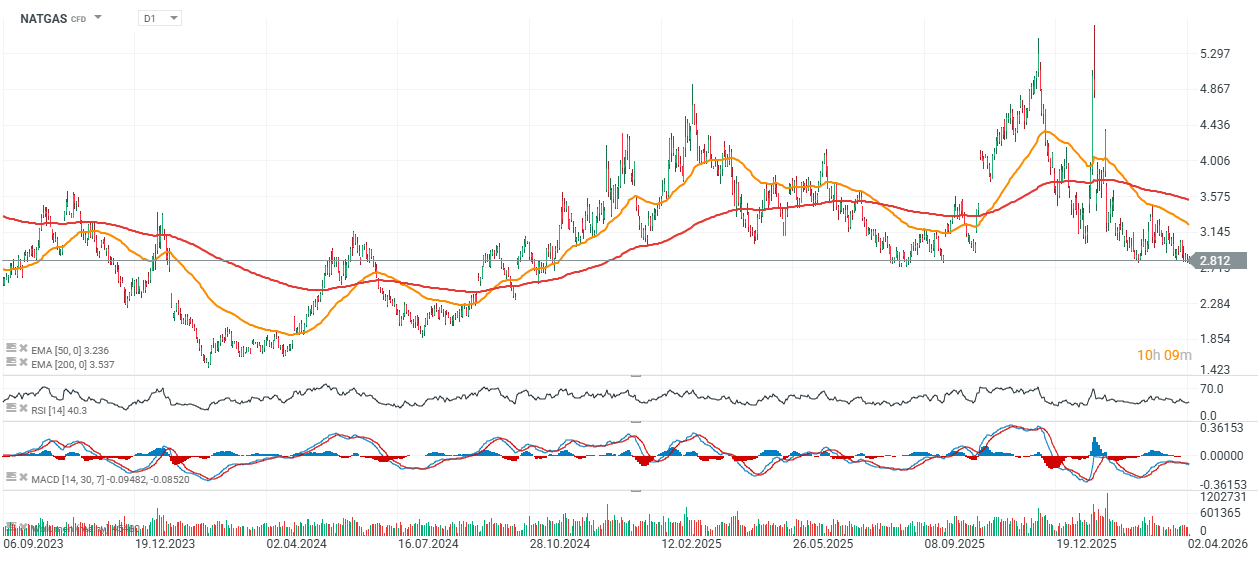
- In summary, a strong—potentially the strongest in over 140 years—El Niño scenario creates a setup in which US gas prices face limited upside, with the market balance shifting toward oversupply unless offset by strong external demand.
Source: xStation5
Source: ECMWF
Source: ECMWF
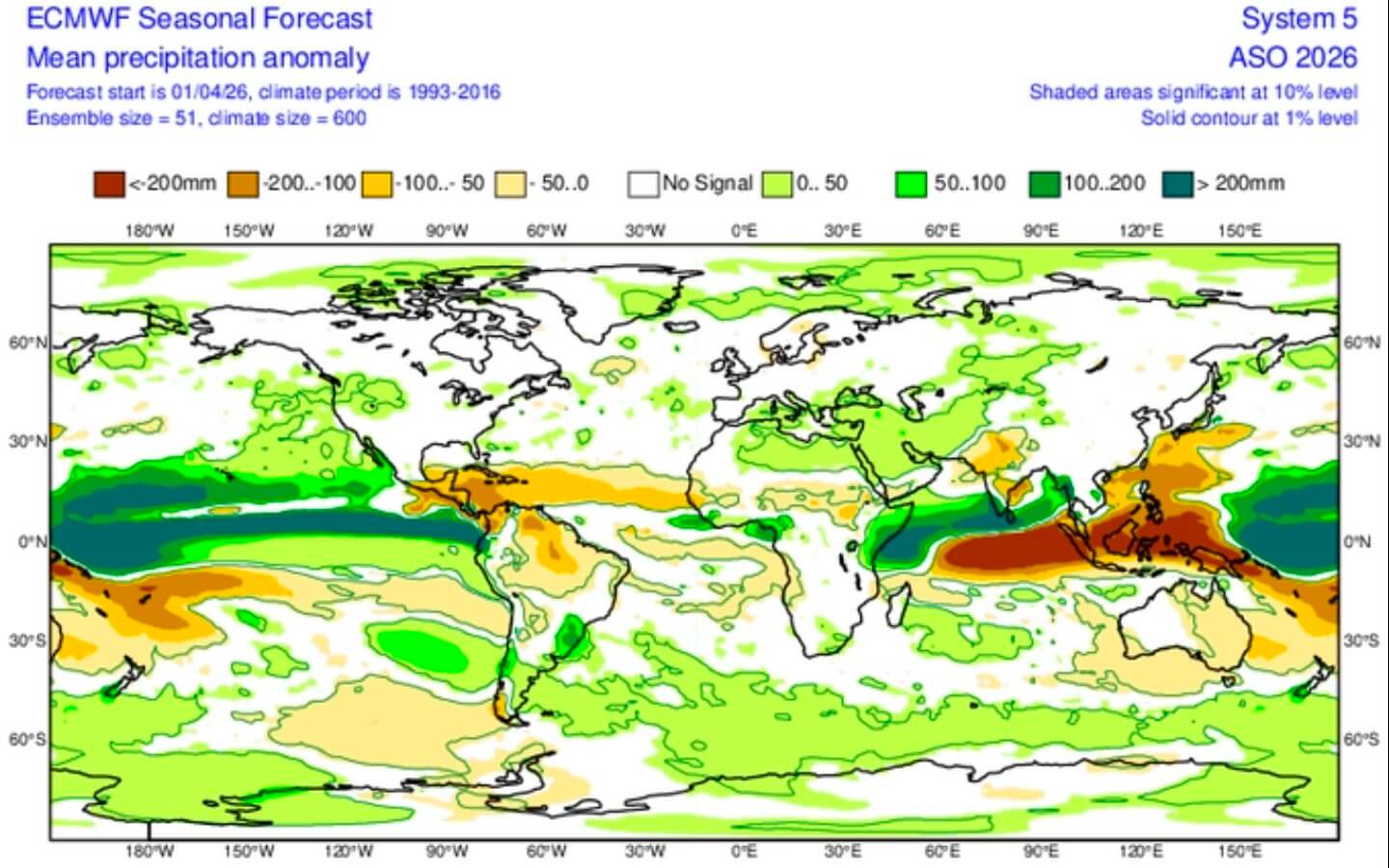
Source: ECMWF
The material on this page does not constitute financial advice and does not take into account your level of understanding, investment objectives, financial situation or any other specific needs. All information provided, including opinions, market research, mathematical results and technical analyzes published on the Website or transmitted To you by other means, it is provided for information purposes only and should in no way be construed as an offer or solicitation for a transaction in any financial instrument, nor should the information provided be construed as advice of a legal or financial nature on which any investment decisions you make should be based exclusively To your level of understanding, investment objectives, financial situation, or other specific needs, any decision to act on the information published on the Website or sent to you by other means is entirely at your own risk if you In doubt or unsure about your understanding of a particular product, instrument, service or transaction, you should seek professional or legal advice before trading. Investing in CFDs carries a high level of risk, as they are leveraged products and have small movements Often the market can result in much larger movements in the value of your investment, and this can work against you or in your favor. Please ensure you fully understand the risks involved, taking into account investments objectives and level of experience, before trading and, if necessary, seek independent advice.