 EUR /
EUR /  USD — Euro / US Dollar
 JPY — US Dollar / Japanese Yen
 GBP /
GBP /  AUD /
AUD /  CAD — US Dollar / Canadian Dollar
 CHF — US Dollar / Swiss Franc
 NZD /
NZD / 
Is the Bank of England right to expect a global stock market sell off?
- April 25, 2026
- Posted by: Today Markets
- Categories: Competitive research, Funding trends, Markets, Trading Bonds
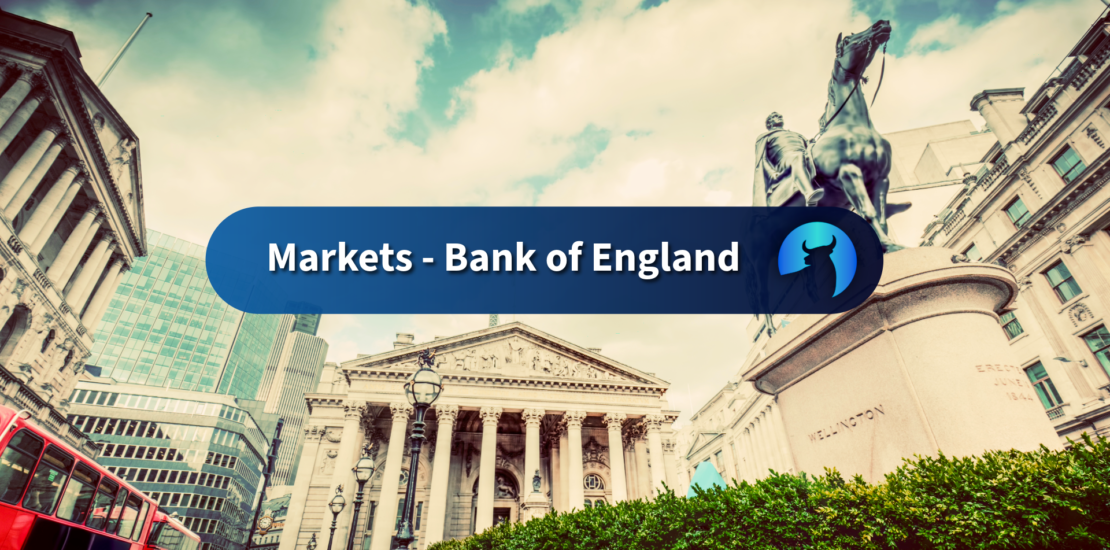
The Bank of England is worried about a stock market crash and expects an ‘adjustment’ in equity prices. The Deputy Governor, Sarah Breedon, told the BBC that she did not know when or by how much stocks would fall, but she claimed that macroeconomic risks were not fully priced into stock prices, after US indices hit record highs earlier this week. It doesn’t take a genius to expect a market correction at some point; there have always been market corrections for as long as trading has existed. Breedon is also the head of Financial Stability at the BOE, so it is her job to worry about these issues. However, should investors be worried too?
BOE paid to worry about market risks
Breedon flagged a few issues that were keeping her ‘awake at night’. These include: the energy price spike caused by the events in the Middle East, and a private credit crunch. The latter is not the same as the banking credit crunch of 2008, but the scale of the private markets has been noted by the BOE. The private credit markets are now worth more than $500bn, and Breedon is concerned that its resilience to economic downturns has not been tested. The BOE is still concerned about US tech stocks, in particular, their extremely high valuations and the amount of money companies such as Microsoft, Meta and Amazon are investing into AI. Breedon notes that AI stocks are extremely expensive, and if there is a macroeconomic shock then these valuations could mean that tech stocks fall sharply. For those who have just funded their stocks and shares ISA, a BOE official talking about a stock market crash is alarming. It is worth breaking down Breedon’s concerns to assess what they mean for the near term.
Energy price spike and the risk to the global economy
All Breedon’s concerns are valid, and it is her job to manage the risks that could impact asset prices. Her first concern around the Middle East crisis and the energy price spike is completely out of any individual investors’ control. No one can say when the Strait of Hormuz will reopen or when the oil price will fall back to pre-war norms. We know that the price of oil is damaging for businesses, from airlines to supermarkets, that must shoulder higher costs. This could lead to lower consumption and lower profits for these companies in the future. On the other hand, energy prices could normalize in the coming months if the war ends. The trouble is, we don’t know what will happen between Iran and the US next. However, there are some strategies to help you deal with this risk. The first is to stay invested. Very few people see this war as dragging on for years. If you invest in stocks and shares, then you should think about holding them for the long term so that you can ride the ups and downs of the global economy.
The costs of not holding stocks
Secondly, although it can feel like a complex environment to hold stocks, you must compare this to the impact of keeping your money in cash. It is a myth to think that cash is a safe investment, especially when inflation is rising. In March, UK CPI rose to 3.3%, if you keep your money in a cash account with a lower interest rate than the inflation rate, this means that in real terms your money is losing value every year. In contrast, UK and US stock markets are posting positive gains so far this year. The main US index is higher by 3%, while the FTSE 100 is up 4.7%. This is something that also needs to be considered when talking about stock market risks.
Is an AI bubble on the cards?
Regarding AI and tech concerns, AI stocks have been in focus in recent months, and it is true that they are trading at huge valuations. Four of the five of the world’s biggest companies are linked to AI. Nvidia, the world’s most highly valued company, it is worth $4.85 trillion, makes the chips for AI, while Alphabet, Microsoft and Amazon are hyperscalers who have invested hundreds of billions of dollars into AI in recent years. These companies’ stock prices have risen by a huge amount, in five years Nvidia’s stock price is higher by 1200%, but earnings have also been high.
Next week, Microsoft is set to announce revenues of $81.4bn for the first three months of the year, a 16% increase in 12 months. Nvidia is expected to breach the $500bn revenue threshold by 2028. Although some debt has been issued by the likes of Microsoft, Amazon and Meta, have mostly fueled their AI spending without debt, and this means that if there is a stock market adjustment like Breedon warns, it may not cause financial strain like we saw in the aftermath of 2008. Breedon is right to be concerned about AI. Revenue generated from AI is expected to hit $50bn in the US this year, on the back of $1 trillion in investment.
AI investment now counts for a large amount of US economic activity, about 1.6% of GDP in 2026, which means that any retrenchment in AI spending could cause economic headwinds. Concerns about private credit are also valid at this stage. It is a relatively new market, and there is concern that private credit funds have poured funds into data centers and other AI investments that could turn sour. There are lots of ‘what if’ scenarios to consider, but it can be more effective to look at the data. In Q1, Fitch Ratings said that the default rate for the US private debt markets was on an upward trend at 5.8% in January, up from 5.6% in December.
Fitch pointed out that while default rates are rising, they remain concentrated and are not broad based. However, it is worth noting that an economic recession caused by the energy price spike could prove to be a significant test for the private credit industry. Overall, while worry is warranted, panic is not justified at this stage. It is the BOE’s job to monitor these events and try and mitigate any negative effects from the worst case scenario playing out. But the truth is, the worst case does not always play out, and expecting it to can impact portfolio returns.
The material on this page does not constitute financial advice and does not take into account your level of understanding, investment objectives, financial situation or any other specific needs. All information provided, including opinions, market research, mathematical results and technical analyzes published on the Website or transmitted To you by other means, it is provided for information purposes only and should in no way be construed as an offer or solicitation for a transaction in any financial instrument, nor should the information provided be construed as advice of a legal or financial nature on which any investment decisions you make should be based exclusively To your level of understanding, investment objectives, financial situation, or other specific needs, any decision to act on the information published on the Website or sent to you by other means is entirely at your own risk if you In doubt or unsure about your understanding of a particular product, instrument, service or transaction, you should seek professional or legal advice before trading. Investing in CFDs carries a high level of risk, as they are leveraged products and have small movements Often the market can result in much larger movements in the value of your investment, and this can work against you or in your favor. Please ensure you fully understand the risks involved, taking into account investments objectives and level of experience, before trading and, if necessary, seek independent advice.