
 EUR /
EUR /  USD — Euro / US Dollar
 JPY — US Dollar / Japanese Yen
 GBP /
GBP /  AUD /
AUD /  CAD — US Dollar / Canadian Dollar
 CHF — US Dollar / Swiss Franc
 NZD /
NZD / 
WTI Crude Oil tumbles as prospective US-Iran accord eases Strait of Hormuz fears
- May 6, 2026
- Posted by: Today Markets
- Categories: Competitive research, Markets, Oil Futures
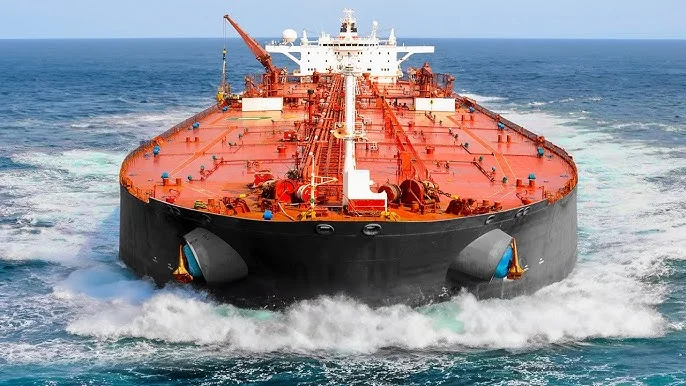
- WTI plunges around $91.00 on Wednesday, down 8.91% on the day, after Axios reported a possible agreement between the United States and Iran.
- The proposed deal would reportedly include a gradual lifting of restrictions in the Strait of Hormuz and an easing of US sanctions on Iran.
- The sharp improvement in market sentiment significantly reduces the geopolitical risk premium embedded in Oil prices.
West Texas Intermediate (WTI) US Oil falls sharply on Wednesday and trades around $91.00 at the time of writing, posting an 8.91% daily decline as markets rapidly reassess geopolitical risks in the Middle East following reports from Axios suggesting major progress between the United States (US) and Iran.
According to Axios, Washington and Tehran are close to reaching a memorandum of understanding aimed at ending the conflict and opening a broader negotiation period regarding Iran’s nuclear program. The discussions reportedly include a gradual lifting of restrictions around the Strait of Hormuz, an Iranian moratorium on nuclear enrichment, as well as an easing of US sanctions alongside the release of billions of dollars in frozen Iranian funds.
The US news outlet added that the White House expects Iran to respond on several key points within the next 48 hours. A Pakistani source involved in the diplomatic efforts also confirmed to Reuters that both sides were “very close” to finalizing a deal.
The developments triggered a strong risk-on move across financial markets and led to a sharp decline in Oil prices, as investors rapidly unwind the geopolitical risk premium linked to potential supply disruptions.
The Strait of Hormuz remains a strategic chokepoint for the global energy market, with roughly one-fifth of global Oil flows transiting through the passage. Any lasting improvement in the regional situation mechanically reduces fears of disruptions to crude exports.
The bearish move accelerated after US President Donald Trump stated that “Project Freedom”, the operation aimed at fully restoring commercial shipping through the Strait of Hormuz, would be temporarily paused to allow diplomatic negotiations to proceed. US Defense Secretary Pete Hegseth also stated that the US-Iran ceasefire “certainly holds for now”, while emphasizing that Washington was not seeking renewed escalation.
The decline in Oil prices comes despite still-tight physical market fundamentals. The American Petroleum Institute (API) reported on Tuesday a decline of 8.1 million barrels in US crude inventories last week, far above the 2.8 million-barrel draw expected by the consensus. Goldman Sachs also warned that global Oil inventories are approaching their lowest levels in the last eight years.
However, in the short term, markets are clearly focusing on the improving geopolitical outlook, considering that a potential agreement between the United States and Iran could gradually normalize energy flows in the region and ease supply-related risks for global markets.