



Ask Price
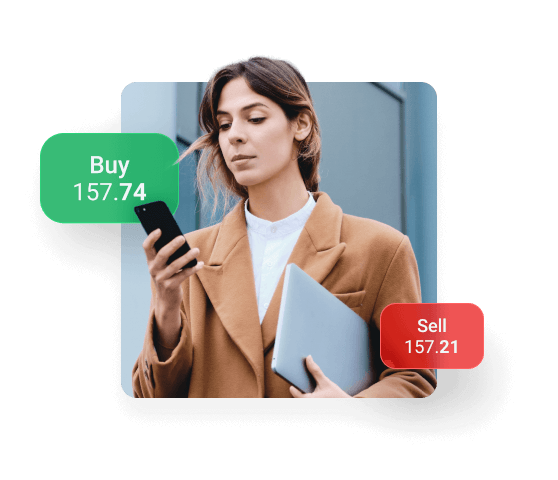
The price at which a trader can buy an instrument. It is typically higher than the bid price.


Explore essential terminology used across the foreign exchange and CFD markets. Build your understanding of trading concepts, market terminology, instruments, orders, risk management and more.
The price at which a trader can buy an instrument. It is typically higher than the bid price.
A financial instrument or market that can be traded, such as a currency pair, index, commodity, stock or cryptocurrency.
An order to buy or sell an instrument immediately at the best available market price.
The current value of a trading account, including unrealised profits and losses.
The first currency in a forex pair. In EUR/USD, EUR is the base currency.
A market environment generally associated with falling prices and negative investor sentiment.
The price at which a trader can sell an instrument.
A market movement through a recognised support or resistance level.
A Contract for Difference is a derivative that allows traders to speculate on price movements without owning the underlying asset.
A fee that may be charged for executing a trade, depending on the account type and instrument.
Two currencies quoted against each other, such as EUR/USD or GBP/USD.
A currency pair that does not include the US dollar, such as EUR/GBP.
The decline in the value of a trading account from a peak to a subsequent low.
A trading style involving opening and closing positions within the same trading day.
A financial instrument whose value is derived from an underlying asset or market.
The value of a trading account after adding or subtracting unrealised profit and loss from the account balance.
The process of completing a buy or sell order in the market.
A currency pair consisting of a major currency and the currency of an emerging or smaller economy.
Short for foreign exchange, Forex is the global market for buying and selling currencies.
The analysis of economic, financial and geopolitical factors that may influence market prices.
The amount of funds available in a trading account to open new positions or absorb potential losses.
A price area where an instrument opens significantly above or below its previous closing price.
Opening a buy position with the expectation that the market price may rise.
Opening a sell position with the expectation that the market price may fall.
A strategy used to help manage potential exposure to adverse market movements.
The use of automated systems and algorithms to execute a large number of trades at very high speed.
A measure designed to track the performance of a group of assets or a particular market.
The amount required to open a leveraged trading position.
The cost of borrowing money or the return earned on deposited funds. Interest rates can influence currency markets.
A chart type used to display an instrument's open, high, low and closing prices over a specific period.
An economic indicator that measures applications for unemployment benefits and may influence market expectations.
A central bank interest rate that can influence borrowing costs and currency valuations.
A common market nickname for the New Zealand dollar, NZD.
A mechanism that allows traders to gain exposure to a larger position using a smaller amount of capital. Leverage can magnify both profits and losses.
An order to buy or sell at a specified price or a potentially better price.
The ability to buy or sell an instrument without causing a significant change in its price.
The amount of funds required to maintain a leveraged trading position.
A notification that an account may no longer have sufficient funds to support open positions.
An order to buy or sell an instrument at the best available price.
A major forex pair generally involving the US dollar and another highly traded currency.
A major US economic indicator measuring employment changes outside the farming sector.
The total value of a position based on the underlying exposure represented by the trade.
A trade that has been entered but has not yet been closed.
A financing adjustment that may apply when a leveraged position is held overnight.
A commonly used unit for measuring changes in the value of a currency pair.
A unit used to describe a price movement in a financial instrument.
The amount of an instrument represented by a trade.
The financial result of a completed or open trade, including realised and unrealised amounts.
The second currency in a currency pair. In EUR/USD, USD is the quote currency.
The current price at which an instrument may be bought or sold.
A price level where selling pressure may limit further upward movement.
The process of identifying, assessing and managing potential trading risks.
The process of carrying an open position from one trading day into the next.
The difference between the bid price and the ask price of an instrument.
An order designed to help limit potential losses by closing a position at a specified level.
A price level where buying interest may help limit further downward movement.
A financing adjustment that may be applied when a leveraged position is held overnight.
An order designed to close a position when a specified profit target is reached.
The analysis of price movements, charts and market data to identify potential trading opportunities.
The general direction in which a market or instrument is moving.
The financial instrument or market on which a derivative is based.
The potential profit or loss of an open position based on current market prices.
A measure of how significantly and quickly the price of an instrument changes.
The amount of trading activity or number of units traded over a given period.
A rapid market movement in one direction followed by a sharp reversal.
An order that has been placed but has not yet been executed.
A currency traded outside the country or monetary jurisdiction where it is officially issued.
The return generated by an investment or financial instrument, often expressed as a percentage.
The official currency of Japan, represented by the currency code JPY.
A situation in which one participant's gain is theoretically balanced by another participant's loss.
A technical analysis tool used to highlight significant price movements and market trends.
Open a Today Markets account and access a wide range of global markets through powerful trading platforms.
Open an Account →