




01
Getting Started
Today Markets is a global trading platform providing access to a
range of financial markets and trading services. Available products,
platforms and account features may vary according to your location,
account type and eligibility.
Select Open an Account and complete the online registration process.
You may be asked to provide personal information and supporting
documentation as part of the account verification process.
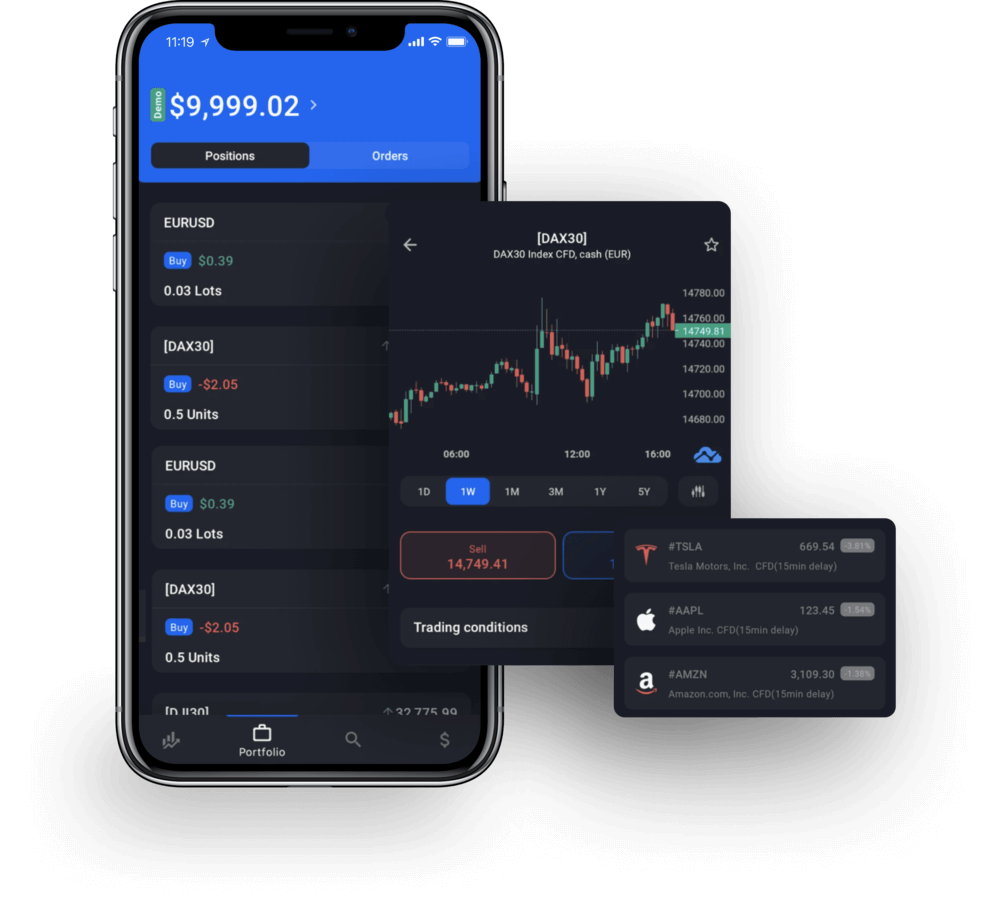
A demo account may allow you to explore the trading environment and
practise trading in a simulated environment before opening a live
account. Availability depends on the account and service offered to
you.
A demo account is designed for simulated trading and familiarisation
with the platform. A live account involves real funds and real market
exposure. Trading conditions, execution and risk should be understood
before moving from a demo environment to live trading.
Account availability depends on your country of residence, eligibility,
applicable laws and the products available in your jurisdiction.
Registration and verification requirements apply.
Availability varies by jurisdiction. Certain products, services or
account features may not be available in every country. The
registration process will determine the services available to you.
Depending on your circumstances, you may be asked for identification,
proof of address and other information required to verify your
identity and meet applicable compliance requirements.
Verification times can vary depending on the information and
documentation supplied and whether additional checks are required.
Providing complete and accurate information can help avoid unnecessary
delays.
Minimum funding requirements, where applicable, depend on the account
structure, payment method and services available to you. Please check
the applicable terms during the account opening or funding process.
You can use the available contact and support channels provided by
Today Markets. For account-specific matters, you may also be able to
contact support through your client area.
02
Markets & Trading
Depending on your location, account type and product availability,
you may be able to access markets including Forex, indices,
commodities, precious metals, stocks, cryptocurrencies, bonds and
other financial instruments.
Forex, or foreign exchange, involves trading one currency against
another through currency pairs. The Forex market is widely traded
globally and prices can be affected by economic data, interest rates,
central-bank decisions, geopolitical events and market sentiment.
A currency pair represents the value of one currency relative to
another, such as EUR/USD. The first currency is the base currency
and the second is the quote currency.
Major currency pairs generally involve the US dollar paired with
another major global currency. Examples commonly include EUR/USD,
GBP/USD, USD/JPY and USD/CHF.
A Contract for Difference, or CFD, is a leveraged derivative that
allows traders to speculate on price movements without necessarily
owning the underlying asset. CFDs involve significant risk and may
not be suitable for all investors.
Stock-related trading may be available through CFDs or other
applicable products, depending on your jurisdiction and account
eligibility. Availability varies by market and service.
Index trading may provide exposure to the performance of groups of
companies or broader markets. Available indices depend on the
products offered in your jurisdiction.
Commodity products may provide exposure to markets such as energy,
agricultural and industrial commodities. Product availability
depends on your location and account eligibility.
Precious-metal products may include markets such as gold and silver,
together with other available metals. The instruments available to
you depend on your account and jurisdiction.
Cryptocurrency-related products may be available depending on your
location, account type and applicable restrictions. Cryptocurrency
markets can be highly volatile and carry significant risk.
Bond-related instruments may be available depending on the products
offered to your account. Bond prices can be influenced by interest
rates, economic conditions, credit factors and market sentiment.
A long position generally expresses an expectation that the price of
an instrument will rise. If the market moves against the position,
losses may occur.
A short position generally expresses an expectation that the price
of an instrument will fall. If the market rises instead, the position
may incur a loss.
The spread is the difference between the bid price and ask price of
an instrument. It represents one of the factors traders should
consider when assessing the cost of entering and exiting a position.
The bid is the price at which the market may buy an instrument from
you. The corresponding ask price is the price at which the market may
sell the instrument to you.
Volatility describes how significantly and rapidly an instrument's
price changes over a period of time. Higher volatility can create
greater opportunities as well as greater potential losses.
Trading availability depends on the opening hours of the relevant
market and instrument. Orders may be unavailable or treated
differently outside normal trading hours, and prices can change
between market sessions.
03
Orders & Execution
Select the instrument you wish to trade on your supported platform,
choose the relevant order type, enter the required trade details
and review the order before submitting it.
A market order is an instruction to open or close a position at the
available market price. The final execution price can differ from
the displayed price, particularly during fast-moving or volatile
market conditions.
A limit order is generally used to seek execution at a specified
price or a more favourable price. Whether and when it executes
depends on the market reaching the required conditions.
A stop order is generally activated when the market reaches a
specified trigger level. The resulting order may then be subject to
the available market conditions.
A stop-loss is a risk-management instruction designed to close a
position when the market reaches a specified level. It can help
manage potential losses, although execution may be affected by
market gaps or rapid price movements.
A take-profit order is designed to close a position when a specified
price level is reached. It can be used to help manage an intended
profit-taking level.
Depending on the platform and order status, you may be able to
modify certain elements of an open position or its associated
orders. Platform functionality and market conditions apply.
Positions can generally be closed when the relevant market is
available for trading. During market closures, suspended trading or
exceptional conditions, execution may not be available.
Slippage occurs when an order is executed at a different price from
the price expected when the order was submitted. It can occur during
periods of rapid price movement, low liquidity or market gaps.
Market prices can change rapidly between the time an order is
submitted and the time it is executed. Volatility, liquidity and
market conditions can therefore affect the final execution price.
During highly volatile conditions, spreads may change, prices may
move quickly and execution conditions may become less predictable.
Traders should consider these risks when using leveraged products.
Orders may be declined or unavailable in certain circumstances,
including insufficient available margin, market closures, instrument
restrictions, technical conditions or other applicable trading
requirements.
A market gap occurs when the price moves from one level to another
without trading continuously through the prices in between. During
a gap, orders may execute at the next available price rather than
the exact requested level.
04
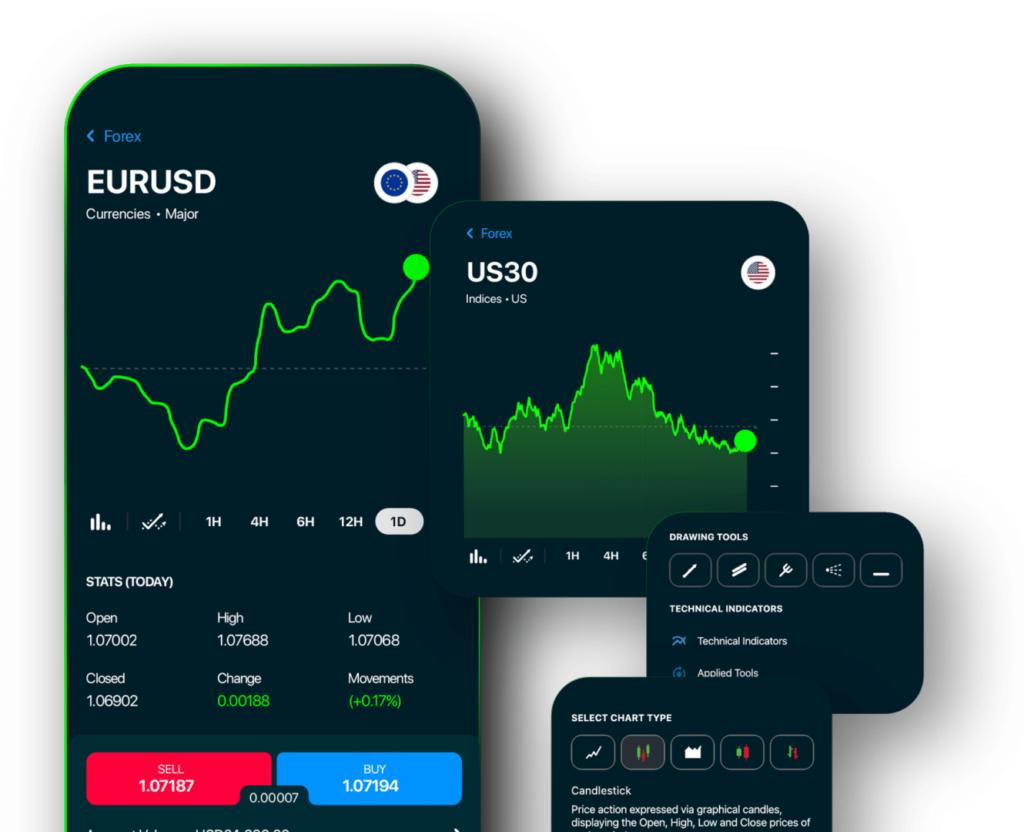
Trading Platforms
Depending on your location and account eligibility, Today Markets
may provide access to platforms including MetaTrader 5 and cTrader,
together with supported web, mobile and desktop access options.
cTrader is a professional trading platform designed for accessing
financial markets and managing trades. It provides charting,
order-management and trading functionality through supported
environments.
MetaTrader 5 is a multi-asset trading platform offering tools for
charting, market analysis, order management and trading. Availability
depends on the account and services offered to you.
The best platform depends on your trading style, preferred tools,
experience and device. Compare the available features and choose
the supported platform that best matches your requirements.
Mobile trading applications may be available for supported iOS and
Android devices, allowing you to monitor markets, manage positions
and stay connected while away from your desktop.
Supported desktop and web-based trading options may be available
depending on your platform and account. Check the relevant platform
information for current system requirements.
Web-based trading may be available through supported platforms,
allowing eligible clients to access trading functionality directly
from a compatible browser.
Supported platforms may allow you to access your trading account
across compatible devices. The exact functionality depends on the
platform and account configuration.
Supported trading platforms provide charting and technical-analysis
tools that may include indicators and drawing tools. Available
functionality depends on the platform you use.
Supported platforms may provide pending-order functionality,
allowing traders to specify conditions under which an order should
be activated.
An interruption to your internet connection can prevent you from
accessing the platform or managing positions manually. Existing
orders and positions remain subject to their applicable trading
conditions. Always consider connectivity risk when trading.
05
Accounts & Verification
Account verification helps meet applicable legal, regulatory and
compliance requirements. You may be asked to provide identification
and address documentation.
Accepted documents depend on your jurisdiction and verification
requirements. You may be asked for a valid identity document and
proof of residential address.
Proof of address can be required as part of identity and regulatory
verification procedures. The document must normally meet the
applicable requirements for your account and jurisdiction.
If additional information or documentation is required, you may be
contacted to provide clarification or replacement documents. The
specific process depends on the reason verification could not be
completed.
Certain account information may be updated through your client area
or by contacting support. Changes to verified information may require
additional checks.
Depending on your account setup, you may be able to request a change
to your registered email address through the appropriate support
process. Verification may be required.
Password-management options may be available through the client area
or platform login process. Use the available password-reset
procedure if you have forgotten your current password.
Use the password-reset functionality provided on the relevant login
page. If you cannot regain access through the standard process,
contact support for assistance.
The availability of multiple trading accounts depends on the account
structures and products available to you. Contact support if you
require further information.
Account closure may be requested through the applicable support
process. Before closing an account, ensure that any open positions
and outstanding account matters have been addressed.
06
Deposits & Withdrawals
Depending on your account and jurisdiction, available funding
methods may be displayed in your client area. Select the appropriate
method and follow the instructions provided.
Available payment methods vary according to your location, account
and applicable payment arrangements. Your client area will display
the funding methods available to you.
Processing times vary by payment method and provider. Some payment
methods may be faster than others, and additional verification may
sometimes be required.
Any applicable fees depend on the funding method, payment provider,
account structure and applicable terms. Review the relevant funding
information before making a deposit.
Bank-transfer funding may be available depending on your account and
jurisdiction. If available, use only the banking instructions
provided through the official funding process.
Funding restrictions may apply to third-party payments. Use the
payment methods and account-funding instructions provided for your
account and contact support if you are unsure.
Withdrawal requests can generally be submitted through your client
account. Available methods, processing requirements and applicable
conditions may vary.
Withdrawal processing times depend on the payment method, account
checks and the receiving financial institution. Additional
verification may be required before a withdrawal is processed.
Delays can occur because of verification requirements, payment
processing times, incomplete information, banking procedures or
other applicable compliance checks.
Whether a withdrawal can be cancelled depends on its processing
status and payment method. Contact support as soon as possible if
you need assistance with a pending request.
07
Costs & Pricing
Depending on the product and account, trading costs may include the
spread, commissions, overnight financing or other applicable charges.
Always review the current terms for the specific instrument you wish
to trade.
Commission structures vary by instrument, account and trading
conditions. Where applicable, the relevant commission should be
reviewed before trading.
Spread conditions depend on the instrument, account and market
environment. Spreads can change as market liquidity and volatility
change.
Market conditions can affect available pricing and spreads. During
periods of high volatility, low liquidity or major market events,
spreads may become wider.
Overnight financing refers to charges or credits that may apply when
a leveraged position is held beyond the applicable trading session.
The amount depends on the instrument, position and applicable terms.
Swap is commonly used to describe the overnight financing adjustment
associated with holding certain leveraged positions. Rates can vary
by instrument and market conditions.
Fees and charges depend on the account, product, service and
applicable terms. Review the relevant fee information before using
a particular service.
Applicable costs may be available through the relevant product
information, trading platform or account documentation. Costs can
vary by instrument and account type.
08
Risk & Leverage
Leverage allows you to gain exposure to a larger position using a
smaller amount of capital. However, leverage increases both potential
gains and potential losses.
Margin is the amount of capital required to maintain exposure to a
leveraged position. Margin requirements vary by instrument, account
and applicable trading conditions.
Free margin generally represents the portion of available account
equity that is not currently being used as margin for open positions.
The exact calculation depends on the trading platform and account.
Margin level is a measure used to compare account equity with the
margin being used by open positions. It can help traders monitor
how much margin capacity remains available.
A margin call may occur when available account equity falls relative
to the margin required to support open positions. Applicable
thresholds and procedures depend on the account and trading
conditions.
A stop-out is a risk-control mechanism under which open positions
may be automatically closed when account margin falls below an
applicable threshold. The relevant threshold depends on the account
and applicable terms.
Higher leverage can increase the size of market exposure relative to
the capital committed. This can magnify both gains and losses, making
risk management especially important.
The risks associated with trading depend on the product, account
structure, applicable protections and your individual circumstances.
You should understand the relevant product risks and applicable
account protections before trading.
Risk-management techniques can include appropriate position sizing,
understanding leverage, using stop-loss orders where suitable,
monitoring margin and avoiding exposure that is inconsistent with
your financial circumstances and experience.
Trading leveraged products involves significant risk and may not be
suitable for all investors. Consider your objectives, experience,
knowledge and financial circumstances before trading.
09
Analysis & Education
Technical analysis involves studying historical price behaviour,
charts, patterns, indicators and market data to help assess possible
future price movements. It does not guarantee future results.
Technical indicators are mathematical calculations applied to market
data such as price and volume. Traders may use them to analyse
trends, momentum, volatility or other market characteristics.
Support and resistance are commonly used technical-analysis concepts.
Support describes an area where buying interest may emerge, while
resistance describes an area where selling pressure may appear.
Neither level guarantees a future market reaction.
A market trend describes the general direction of price movement over
a period. Traders commonly refer to upward, downward and sideways
trends when analysing markets.
Candlestick charts display information about an instrument's price
over a selected period, including the opening, closing, high and low
prices. Traders commonly use them to analyse price behaviour.
A moving average calculates an average price over a specified number
of periods. Traders may use moving averages to identify trends and
smooth short-term price fluctuations.
The Relative Strength Index, commonly known as RSI, is a momentum
indicator used to assess the strength and speed of recent price
movements. Like other indicators, it should not be treated as a
guarantee of future market direction.
Moving Average Convergence Divergence, or MACD, is a technical
indicator commonly used to analyse momentum and trend conditions
using relationships between moving averages.
Fundamental analysis considers economic, financial and business
factors that may influence the value or price of an asset or market.
Examples include interest rates, inflation, economic growth and
company financial performance.
An economic calendar lists scheduled economic announcements and
events that may influence financial markets. Traders may use it to
monitor potentially market-moving releases.
Interest-rate expectations can influence currencies, bonds, equities
and other financial markets. Central-bank decisions and changes in
market expectations can contribute to price volatility.
Inflation data can influence interest-rate expectations, currencies,
bonds, equities and commodities. The market reaction depends on the
data, expectations and wider economic conditions.
Gross Domestic Product, or GDP, measures the value of goods and
services produced within an economy over a specified period. GDP
releases can influence market expectations about economic growth.
Company earnings can influence investor expectations about revenue,
profitability and future growth. Market reactions often depend on
how reported results compare with expectations.
Educational content is intended to help explain financial markets,
trading concepts and analytical approaches. It should not be treated
as personalised investment advice, a recommendation or a guarantee
of future performance.
10
Trading Information & Risk
Trading availability depends on the instrument and applicable
market conditions. Major economic announcements can cause increased
volatility, wider spreads and rapid price movements, increasing
trading risk.
Market opening hours can change around public holidays. Certain
instruments may have reduced hours or temporary closures. Always
check the applicable trading schedule before placing orders.
A market gap occurs when an instrument opens or moves to a new price
level without continuous trading through all intervening prices.
Gaps can occur after market closures or significant events.
Cryptocurrency markets can experience substantial price movements
influenced by liquidity, market sentiment, news, technological
developments and broader financial conditions. This can increase
both potential opportunity and potential loss.
A stop-loss is intended to help manage risk but may not guarantee
execution at the exact selected price. During gaps or rapid market
movements, execution can occur at a different available price.
Yes. CFDs are leveraged products and can result in significant
losses. You should understand how CFDs work, consider your financial
circumstances and ensure you understand the applicable risk warnings
before trading.
Position size should be considered in relation to your account,
experience, financial circumstances, leverage and the amount you
could afford to lose. There is no universally appropriate position
size for every trader.
No. Financial markets are uncertain and trading outcomes cannot be
guaranteed. Past performance and historical market behaviour do not
guarantee future results.