





The eurozone flash composite PMI rose to 52.1 in August, beating the 51.7 forecast and pointing to a somewhat stronger pace of overall economic activity.
- The French manufacturing business climate index rose to 103 points, above expectations of 101 and the previous reading of 101.
- France’s flash manufacturing PMI increased to 51.5 from 49.8, clearly beating the 50.0 consensus and moving back above the expansion threshold.
- France’s flash services PMI fell to 48.4, below expectations of 49.4 and the previous 49.6 reading.
- The French flash composite PMI slipped to 48.8 versus 49.5 expected and 49.4 previously, pointing to continued weakness in overall activity despite the improvement in manufacturing.
- Germany’s flash services PMI fell to 48.5, below expectations of 50.1 and the previous reading of 49.8, remaining in contraction territory.
- Germany’s flash manufacturing PMI rose to 54.1 from 52.2, clearly beating the 52.1 consensus and signaling stronger expansion in the sector.
- Germany’s flash composite PMI eased to 51.0 versus 51.3 expected and 51.3 previously, meaning overall activity is still expanding, but at a slightly slower pace than the market had anticipated.
Eurozone 1-year inflation expectations fell to 2.9% in July from 3.0% previously, while 3-year expectations eased to 2.7% from 2.8%, suggesting a modest improvement in the medium-term inflation outlook.
What does European PMIs show?
The eurozone data are better than the headlines from France and Germany might initially suggest. The flash composite PMI at 52.1 points to a broader improvement in activity, and the strongest part of the picture is clearly manufacturing, where both France and Germany surprised to the upside. Germany’s manufacturing PMI at 54.1 is especially important because it suggests that the industrial side of Europe’s largest economy is finally gaining some traction after a long period of weakness. The services side is much less convincing. France remains in contraction, Germany also slipped below 50, and that matters because services are the larger part of both economies. So this is not a clean acceleration story yet. It looks more like a recovery that is becoming increasingly dependent on industry while domestic demand and services remain softer. The inflation expectations data are quietly supportive. One-year expectations fell to 2.9% and three-year expectations to 2.7%, which suggests that households are not becoming more worried about a renewed inflation spiral. That gives the ECB a little more breathing room, especially if growth continues to improve without a corresponding rebound in inflation expectations. My read is that the eurozone is moving into a more balanced phase: growth is no longer obviously weak, but it is also not strong enough to remove policy concerns. The most constructive development is that manufacturing is improving at the same time as inflation expectations are easing. If that combination persists, it would be a much healthier backdrop for European equities than a recovery driven by higher prices or fiscal stimulus alone.
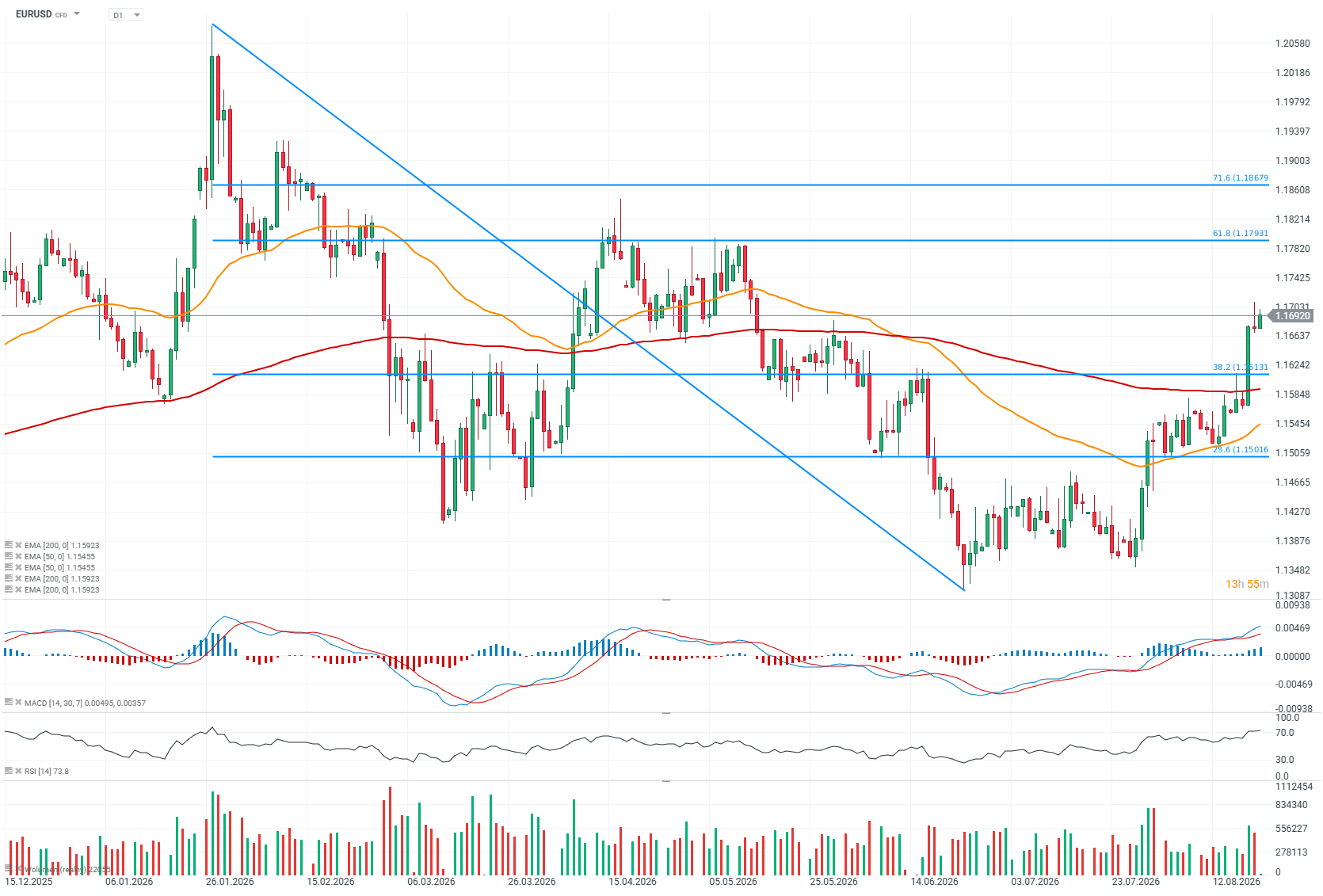
EURUSD (D1 interval)
Source: xStation5