




Key takeaways
- The BOJ could raise interest rates as early as September, but for the yen, what the central bank does next may be even more important — Reuters sources suggest the entire rate-hike cycle could accelerate.
- Markets are already reacting: investors are pricing in around an 80% probability of a September rate hike, while the yield on 5-year Japanese government bonds has reached a record high.
- The yen remains close to 160 per U.S. dollar despite the earlier intervention, and the BOJ’s September meeting could prove to be a key test for the next move in USD/JPY.
USDJPY is edging lower today, partly due to a weaker U.S. dollar, although the yen also appears to be supported by reports from Reuters. According to three anonymous sources familiar with the Bank of Japan’s thinking, the BoJ could raise interest rates as early as September 2026. The central bank is also reportedly considering accelerating the pace of monetary tightening from its recent rate of around two hikes per year. The sources pointed to the possibility of a move at the September 17–18 meeting, although the BoJ has not commented on the reports. For the yen, this could represent an important shift in the narrative, as the market may need to consider not only another rate hike but also potentially shorter intervals between subsequent moves.
- The BoJ’s policy rate currently stands at 1%, its highest level in 31 years, after the central bank left rates unchanged at its July meeting.
- Markets are pricing in around an 80% probability of a September rate hike, while the yield on 5-year Japanese government bonds has risen to a record high.
- The yen remains close to 160 per U.S. dollar despite the joint Japan-U.S. intervention in the FX market in July.
Why could the BoJ accelerate rate hikes?
The main argument in favor of faster monetary tightening is Japan’s increasingly uncomfortable inflation backdrop. Annual wholesale inflation remained around three-year highs in July, while surveys of inflation expectations among households, businesses and economists show readings approaching or exceeding 2%. The exchange rate is particularly important. A weak yen raises the cost of imported energy, commodities and other goods, potentially adding to inflationary pressure across the economy. In July, the Japanese currency fell to its weakest level in around 40 years, and the subsequent rebound was not enough to produce a lasting reversal. With oil prices also elevated, the weak yen has become increasingly relevant to the BoJ’s efforts to control inflation. A change in stance can also be seen in the central bank’s communication. The summary of opinions from the July meeting showed that some BoJ board members favored faster rate hikes to prevent monetary policy from falling behind inflation. Governor Kazuo Ueda has also indicated that the pace of tightening could be accelerated if financial conditions prove too accommodative.
What would faster rate hikes mean for the yen?
For the yen, the key issue is not necessarily a single September hike, but the potential change in the entire interest-rate path. Japan maintained extremely low borrowing costs for years while U.S. interest rates were considerably higher. This gap increased the attractiveness of strategies involving borrowing or funding positions in yen and investing in higher-yielding assets. If the BoJ does move from roughly two hikes per year toward more frequent tightening, the yield differential between Japanese and foreign assets could begin to narrow more quickly. The bond market suggests investors are already partially pricing in such a scenario: following the Reuters report, the yield on 2-year Japanese government bonds, which is particularly sensitive to BoJ policy expectations, moved higher, while the 5-year yield reached a record high. The prospect of higher Japanese interest rates does not automatically imply sustained yen appreciation. USDJPY also depends on U.S. Treasury yields, Federal Reserve policy, energy prices and global demand for the dollar. Elevated U.S. bond yields continue to provide the dollar with a relative advantage, while higher oil prices are unfavorable for Japan as a major energy importer. This also helps explain why the joint Japan-U.S. intervention in July failed to produce a lasting change in the exchange rate trend. Intervention can sharply alter short-term market dynamics, but on its own it may struggle to overcome interest-rate differentials and other macroeconomic forces. For the yen’s longer-term direction, the key question may therefore be whether a September hike — if it happens — would be an isolated move or the beginning of a faster BoJ tightening cycle.
USDJPY chart (D1, H1)
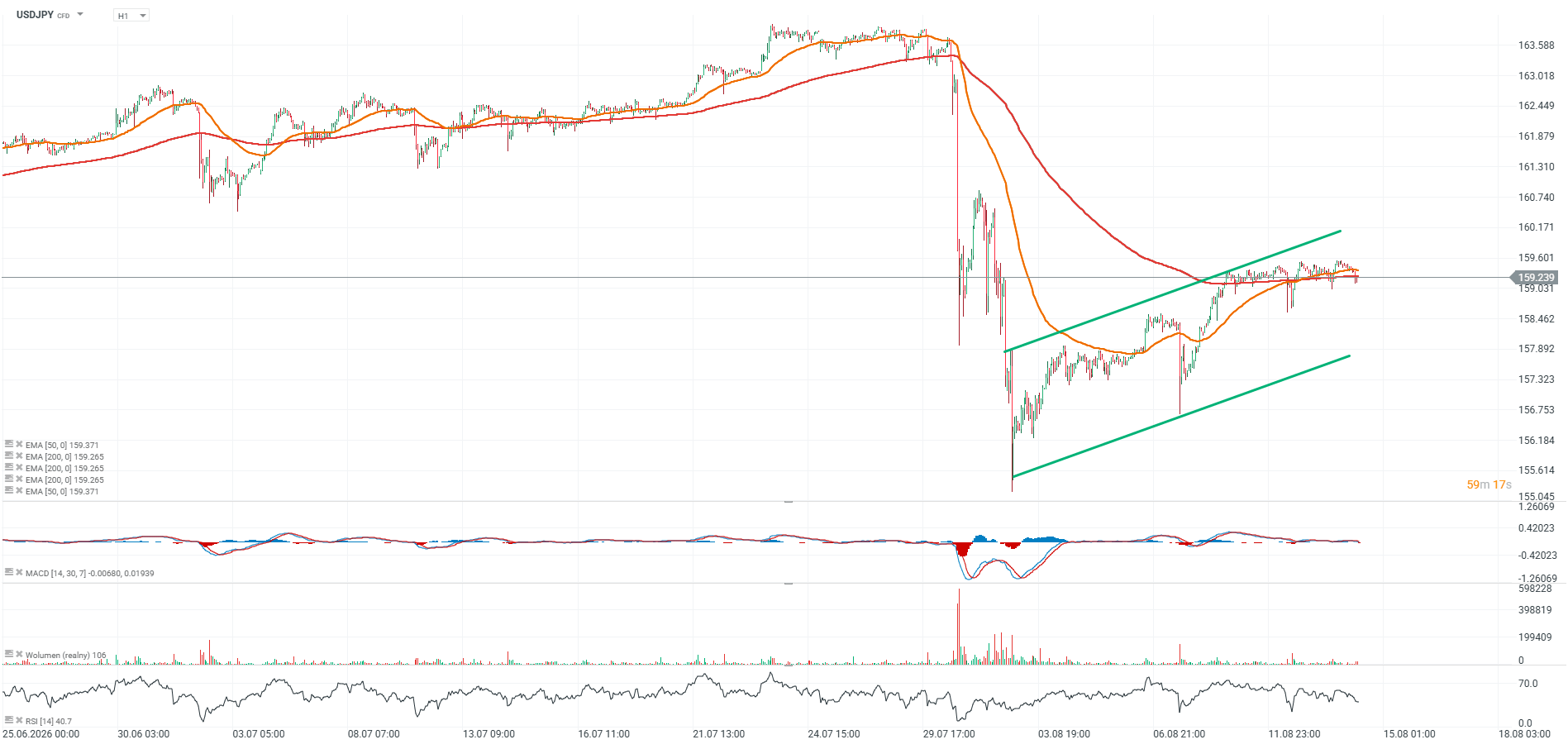
The pair has recovered part of the losses triggered by the intervention, which does not represent a lasting mechanism for shaping free-market forces. USDJPY remains within an upward price channel, and as long as it stays above 155 and the 200-session exponential moving average (EMA200, red line, around 159), the broader uptrend remains the baseline scenario. A renewed decline toward 156 could increase the probability of a trend reversal and cannot be ruled out if the BoJ delivers a meaningful shift in monetary policy.
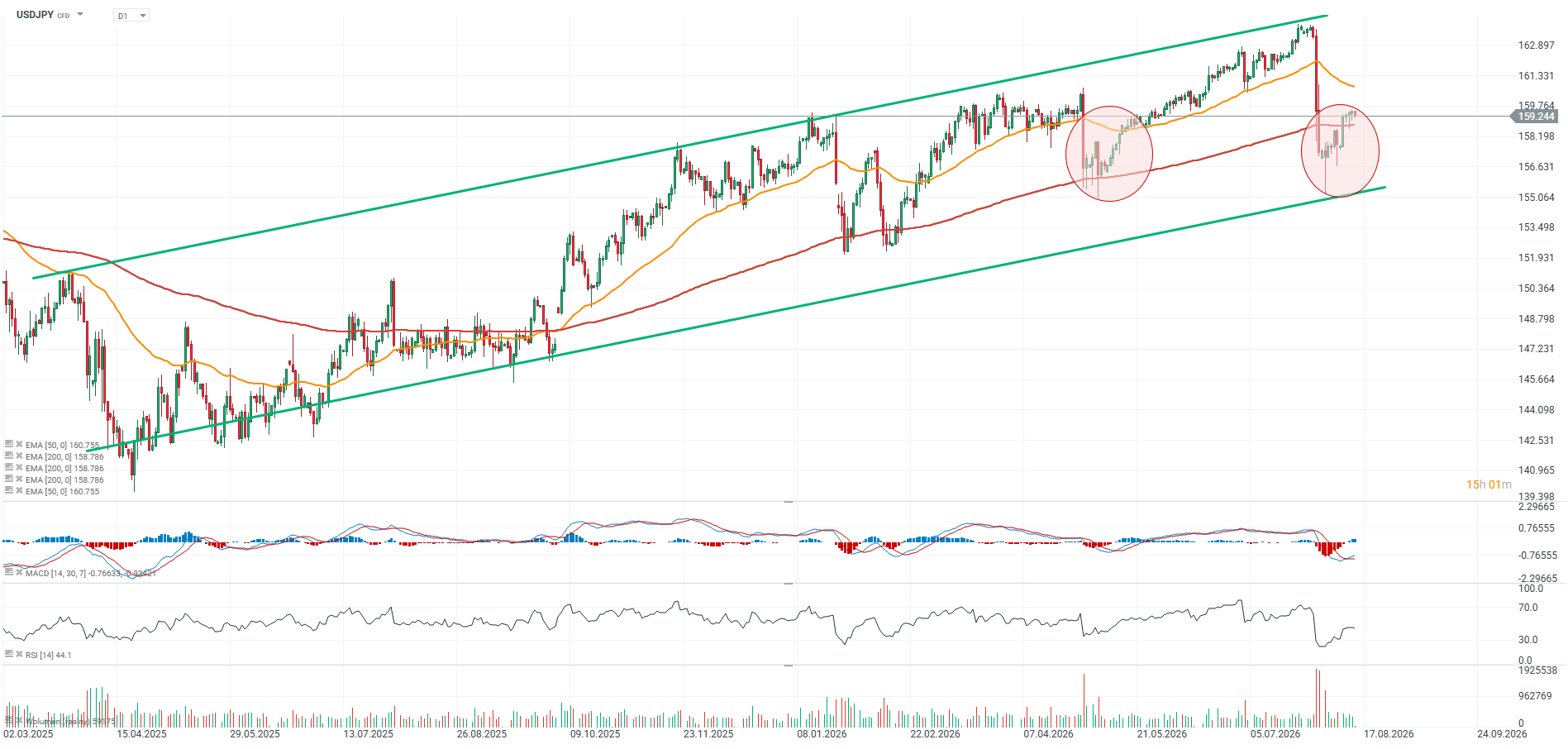
Source: xStation5 On the hourly timeframe, USDJPY remains within a short-term ascending channel. A break below its lower boundary could trigger a 1:1 correction and potentially push the pair toward the 150 area.
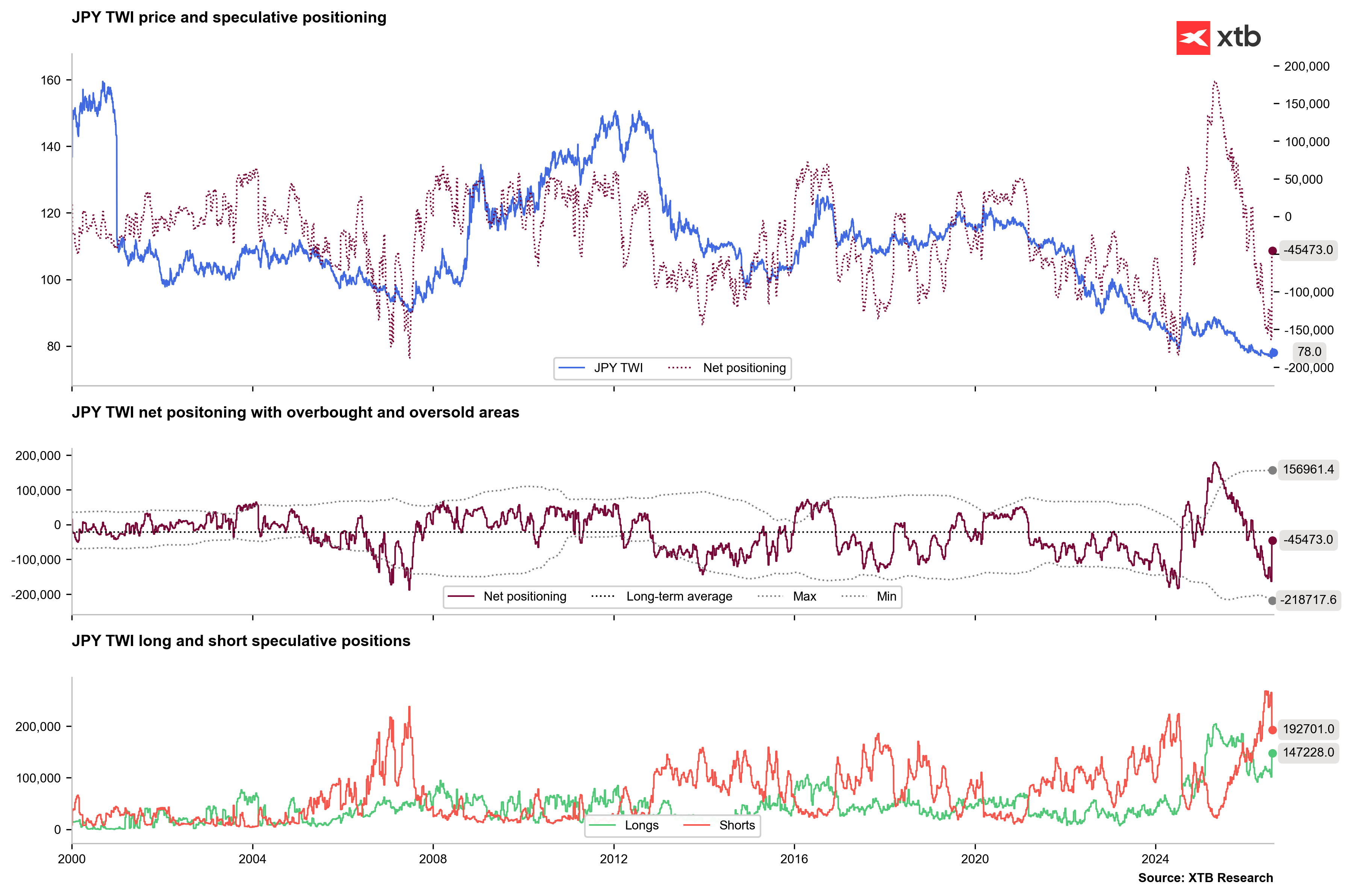
Source: xStation5 The chart of speculative positioning in yen futures shows a clear change following the latest interventions. Data released last Friday, covering positions as of the previous Tuesday, showed a rotation from net short to net long positioning. In the past, shifts of this magnitude have tended to provide additional support for the yen. The key question is what the latest positioning data, covering this Tuesday and due to be released today, will show.
Source: XTB