






The rise in oil prices is putting pressure on the precious metals market today, with gold down nearly 1.5% and silver falling close to 2.5%. The move comes alongside higher bond yields and growing expectations for faster interest-rate hikes in the U.S. Volatility may increase this afternoon when the U.S. JOLTS and ISM Manufacturing data are released at 3 PM GMT. Weaker data could support precious metals, while stronger readings and a high manufacturing prices index could theoretically favor sellers.
- Gold’s weakness began after weekend comments from Kevin Warsh revived concerns about the future path of U.S. interest rates.
- Despite short-term pressure from higher yields and expectations for a more restrictive Fed, long-term structural demand for gold remains very strong.
- According to the latest World Gold Council data, central banks bought a net 289 tonnes of gold in Q2, more than five times the 57 tonnes purchased in Q1 and the highest figure ever recorded for a second quarter.
- A WGC survey shows that 45% of central banks plan to continue increasing their gold reserves over the next 12 months.
- Purchases are broadly distributed geographically, suggesting that demand is not being driven by just one or two major buyers.
- The People’s Bank of China increased its gold reserves by 20 tonnes in July to a record 2,377.5 tonnes. In total, China has added 60 tonnes so far in 2026.
- Poland has been even more aggressive, increasing its reserves by 82 tonnes this year to 632 tonnes.
- Even during price corrections, gold continues to benefit from very strong institutional demand from central banks.
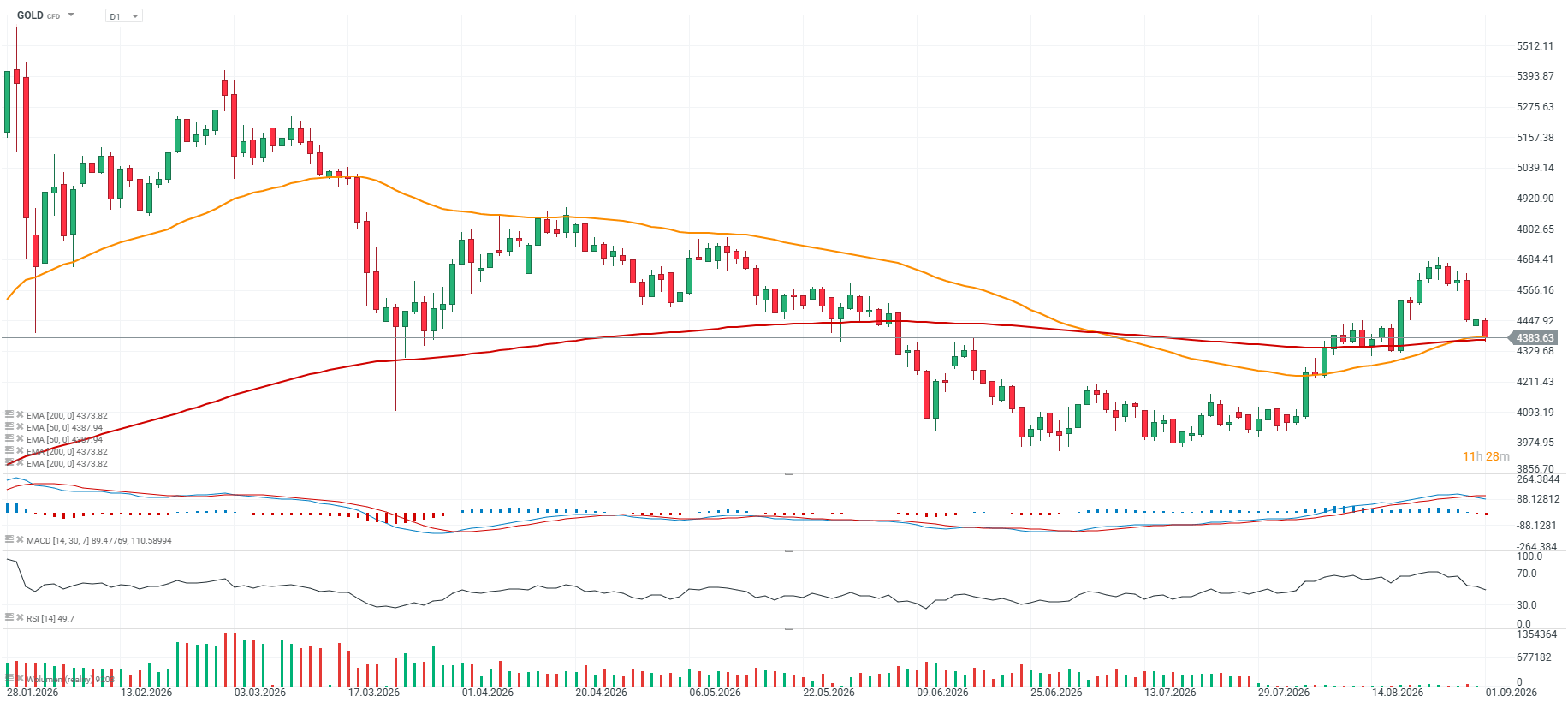
GOLD chart (D1 interval)
Gold is defending its 200-day exponential moving average today, a key technical level separating the broader bearish and bullish trends. A close below $4,350 per ounce could point to more prolonged weakness in precious metals.
Source: xStation5