





Global markets enter the new week with investors balancing three competing forces: renewed fiscal concerns in Europe, fading expectations for another Federal Reserve rate hike and increasingly stretched valuations across the technology sector.
Europe is facing the greatest immediate political and bond-market pressure, with French yields elevated and the euro under renewed pressure. At the same time, softer US labour-market data are reducing expectations for further Federal Reserve tightening, providing support for equities and particularly technology stocks.
The question for markets now is whether lower rate expectations can sustain the equity rally while sovereign bond yields remain historically elevated.
Market Snapshot
| Market | Current Situation | Key Risk |
|---|---|---|
| EUR/USD | Below $1.12 | French fiscal stress |
| French Bonds | Yield spreads elevated | Eurozone contagion |
| US 10-Year Treasury | Around 5.28% | Further yield increase |
| US Equities | Near record highs | Narrow market breadth |
| Nasdaq 100 | Record territory | Earnings expectations |
| S&P 500 | Near record highs | Valuation risk |
| Brent Crude | Above $101 | Inflation pressure |
| Fed Rate Expectations | October hike probability falling | USD and yields |
| AI Stocks | Strong leadership | Earnings disappointment |
Europe Takes the Spotlight
Europe is beginning the week under renewed pressure as fiscal and political concerns increasingly influence bond and currency markets.
France remains at the centre of investor attention, with the country’s bond yields rising sharply and the spread against German debt reaching levels associated with previous periods of Eurozone stress.
The concern is no longer limited to France. Investors are watching whether higher borrowing costs and fiscal uncertainty begin to spread into other heavily indebted European markets.
Spain is also facing renewed political uncertainty, adding another layer of risk for investors already concerned about the stability of the region’s fiscal outlook.
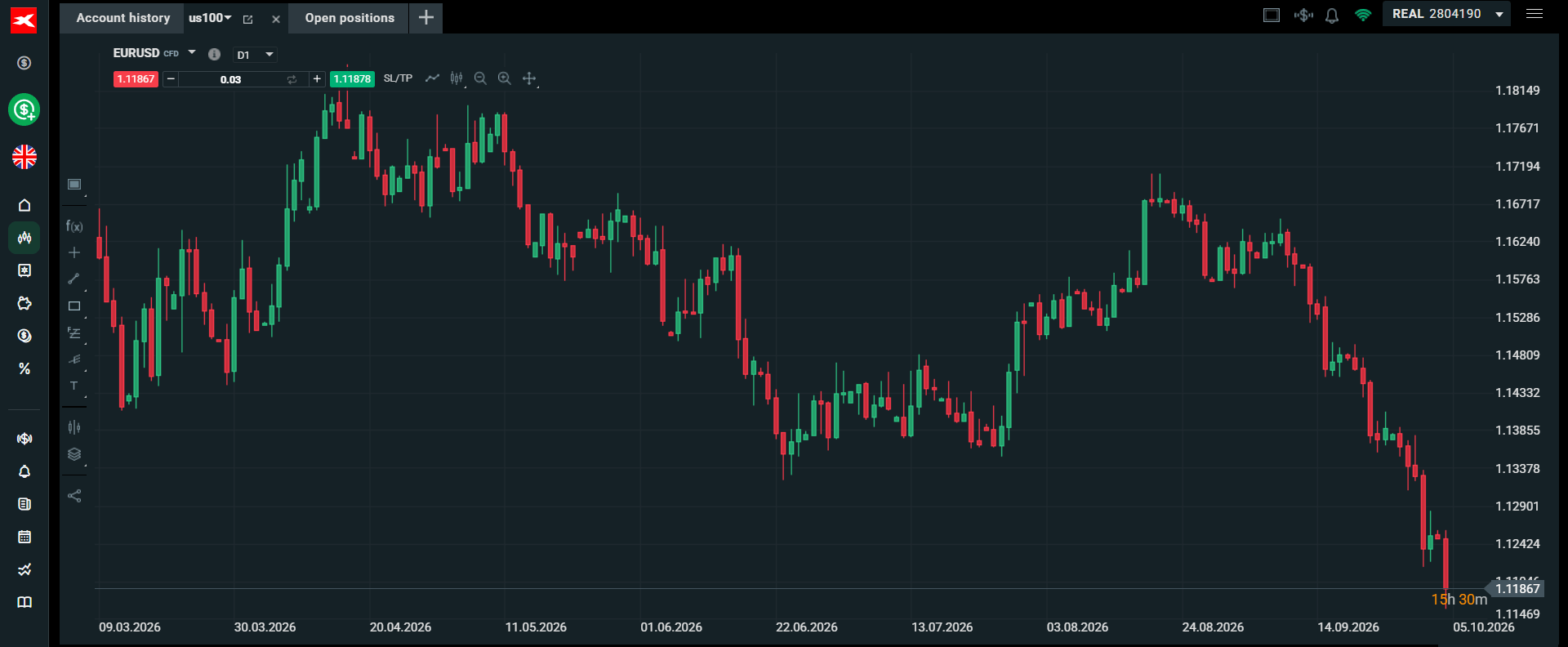
The euro is therefore entering the week on the defensive, with EUR/USD trading below $1.12.
Can Europe Avoid Bond-Market Contagion?
The key question is whether the deterioration in French bonds remains isolated or becomes a broader Eurozone problem.
If French yields continue to rise while German yields remain comparatively stable, the widening spread could increase pressure on European policymakers.
The ECB could eventually face a difficult balancing act between controlling inflation and preventing disorderly bond-market conditions.
For financial markets, a further deterioration in French debt could put additional pressure on the euro and European equities.
A stabilisation in French yields, however, could provide an important relief rally.
Oil Remains an Important Inflation Risk
Brent crude remains above $101 a barrel, keeping energy prices firmly on the radar of bond investors.
The recent combination of elevated oil prices and rapidly rising sovereign yields has created a difficult environment for financial markets.
A sustained decline in crude prices would provide some relief by reducing inflation expectations and potentially easing pressure on central banks.
Conversely, another move higher in oil would make it more difficult for policymakers to respond to weaker growth with easier monetary policy.
US Payrolls Change the Fed Narrative
The latest US employment data are becoming one of the most important drivers of market expectations.
Only 29,000 jobs were created in September, while unemployment increased and wage growth moderated.
The combination suggests that the US labour market is losing momentum without generating additional inflationary pressure.
As a result, expectations for an October Federal Reserve rate hike have fallen sharply.
This is supporting US equities and reducing some of the upward pressure on shorter-duration Treasury yields.
The next question is whether the weakness in employment represents a temporary slowdown or the beginning of a more significant deterioration in the US economy.
Can US Market Breadth Broaden?
The US equity market remains strong, but its internal structure continues to raise questions.
The Nasdaq 100 has reached another record high, with mega-cap technology and semiconductor companies leading the advance.
The S&P 500 is also close to its record level.
However, market leadership remains narrow.
Technology and energy have been among the strongest areas, while consumer discretionary, utilities, communications and financials have struggled.
A broader participation across sectors would strengthen the case for a sustainable year-end rally.
If the rally remains concentrated in a small group of AI-related companies, the market could become increasingly vulnerable to disappointment during the upcoming earnings season.
Sovereign Bond Yields Remain a Major Risk
The bond market remains one of the biggest potential sources of volatility.
The US 10-year Treasury yield is around 5.28%, while longer-term yields remain elevated despite the reduction in expectations for an October Fed hike.
The key question is whether yields have reached a peak.
A sustained move lower in Treasury yields would provide relief for equity valuations, particularly technology companies whose future earnings are more sensitive to discount rates.
A move above 5.5%, however, could create renewed pressure across financial markets by increasing borrowing costs and challenging equity valuations.
French Yields Remain Under Pressure
French bonds are likely to remain one of the most important European market indicators.
The spread between French and German yields has widened significantly as investors demand greater compensation for French fiscal and political risk.
A continued rise in French yields would increase pressure on the government to address the budget deficit while simultaneously raising borrowing costs.
It could also test the ECB’s willingness to respond if market conditions become disorderly.
For the euro, another significant deterioration in French bonds could create renewed downside pressure on EUR/USD.
Technology Stocks Face an Earnings Test
The AI-driven equity rally is entering a more challenging phase.
Technology companies are benefiting from strong expectations around artificial intelligence, data centres and semiconductor demand, but valuations increasingly depend on exceptionally strong earnings growth.
Current expectations for technology-sector earnings growth are extremely high.
If companies meet or exceed those expectations, the market could justify elevated valuations and maintain its leadership into the final quarter.
If earnings disappoint, however, the reaction could be significant because investors are already paying substantial premiums for AI exposure.
AI Investment Creates a Second Risk
The AI investment cycle is also generating a large increase in corporate capital expenditure and debt issuance.
The scale of investment required to build data centres, computing infrastructure and supporting networks means that technology companies and their financing partners are becoming increasingly dependent on favourable capital-market conditions.
This creates a potential feedback loop.
Higher bond yields increase financing costs, which can reduce the attractiveness of long-duration technology valuations. At the same time, weaker technology shares could make investors more cautious about the enormous capital commitments associated with AI infrastructure.
Bullish Scenario
Markets could remain constructive if several conditions develop simultaneously.
A weaker US labour market could keep the Federal Reserve from tightening further, allowing Treasury yields to stabilise or decline.
If US inflation continues to moderate, investors could increasingly price a more patient Fed.
At the same time, strong third-quarter earnings from major technology companies could validate current valuations.
A stabilisation in French bond yields would further improve sentiment and could allow European equities and the euro to recover.
Bearish Scenario
The principal risk is a renewed rise in sovereign bond yields.
A move in the US 10-year yield towards or above 5.5% would increase pressure on equity valuations and could trigger a broader risk-off move.
In Europe, continued deterioration in French bonds could generate concerns about wider Eurozone contagion.
Technology stocks face an additional risk if earnings fail to meet elevated expectations.
A combination of higher yields, expensive technology valuations and weaker economic data would create a particularly challenging environment for equities.
Currency Outlook
The US dollar remains closely linked to the direction of interest-rate expectations.
If the weaker US labour market continues to reduce expectations for Fed tightening, the dollar could remain under pressure.
The euro faces a more complicated outlook.
Lower European rate expectations could weigh on the currency, while rising French bond yields could increase the risk premium demanded by investors.
EUR/USD therefore remains vulnerable to another decline if French fiscal concerns intensify.
A move towards $1.10 would become increasingly plausible if the European bond-market situation deteriorates further.
Chart 1: EURUSD
Louis Roche Analysis
The major theme for markets now is the conflict between falling short-term rate expectations and still-elevated long-term borrowing costs.
The weaker US employment data are clearly supportive for equities because they reduce the immediate probability of another Fed rate hike. But investors cannot assume that lower policy-rate expectations automatically mean lower long-term Treasury yields.
The bond market remains the critical variable.
If the US 10-year yield begins to fall meaningfully, the current technology-led equity rally could broaden and potentially develop into a stronger fourth-quarter advance.
If yields remain above 5% or begin moving towards 5.5%, the valuation pressure on technology and other long-duration assets will increase.
Europe presents the second major risk.
French fiscal concerns are no longer simply a domestic issue. If the widening spread against Germany continues, investors could begin questioning the broader stability of Eurozone sovereign markets.
For FX markets, this makes EUR/USD particularly important. A stabilisation in French bonds could allow the euro to recover, while another deterioration could accelerate the move towards $1.10.
My focus this week would therefore be on US Treasury yields, French-German spreads, EUR/USD and the breadth of the US equity rally.
These four indicators should provide a clearer signal about whether markets are entering a sustainable year-end risk-on phase or approaching another period of volatility.
Coming Sessions
Markets will focus on:
- Federal Reserve meeting minutes
- European Central Bank meeting minutes
- US inflation and labour-market developments
- US Treasury yields
- French-German bond spreads
- EUR/USD
- Brent crude
- US equity-market breadth
- Technology and semiconductor earnings expectations
- AI-related capital expenditure
- European fiscal developments
The Federal Reserve minutes will be particularly important if they reveal a broader shift towards patience among policymakers.
The ECB minutes will receive attention for their assessment of inflation, but investors will also be watching for any indication of how policymakers might respond if European sovereign stress intensifies.
Currency Hedger View
Currency Hedger sees the week ahead as a macro-driven environment where interest rates, sovereign bond spreads, oil and equity-market risk appetite are likely to remain closely interconnected.
For international businesses, the most important currency risk remains the interaction between the US dollar and the euro.
Further deterioration in European bond markets could increase EUR/USD downside volatility, while a decline in US Treasury yields could weaken the dollar and provide support for major currencies.
Businesses with international revenues, supplier payments or cross-border exposures should therefore remain alert to rapid changes in currency levels as markets reassess central-bank expectations.
Currency Hedger monitors FX markets alongside global commodities and macroeconomic conditions, helping businesses assess and manage their international currency exposure.
Open an account with Currency Hedger:
Open a Currency Hedger Account
Visit Currency Hedger:
Contributor: Louis Roche – Currency Hedger
Market analysis prepared for Today Markets. For informational purposes only and not intended as investment, trading, financial or commodity advice.