


Key takeaways
- Nasdaq 100 futures are rebounding by 1.1% following the steepest weekly drop since April 2025.
- Growing concerns over AI infrastructure financing and high bond yields are weighing on tech valuations.
- Upcoming quarterly reports from major tech companies will determine the near-term direction of the market.
Nasdaq 100 futures are rebounding by 1.1% today, taking a breather after the recent sell-off. As a reminder, the index closed last week down 5.5%, marking its steepest weekly drop since the tariff turmoil in April 2025. Figure 1: Percentage of Nasdaq 100 Companies Above 50-Day Moving Average (2024 – 2026)
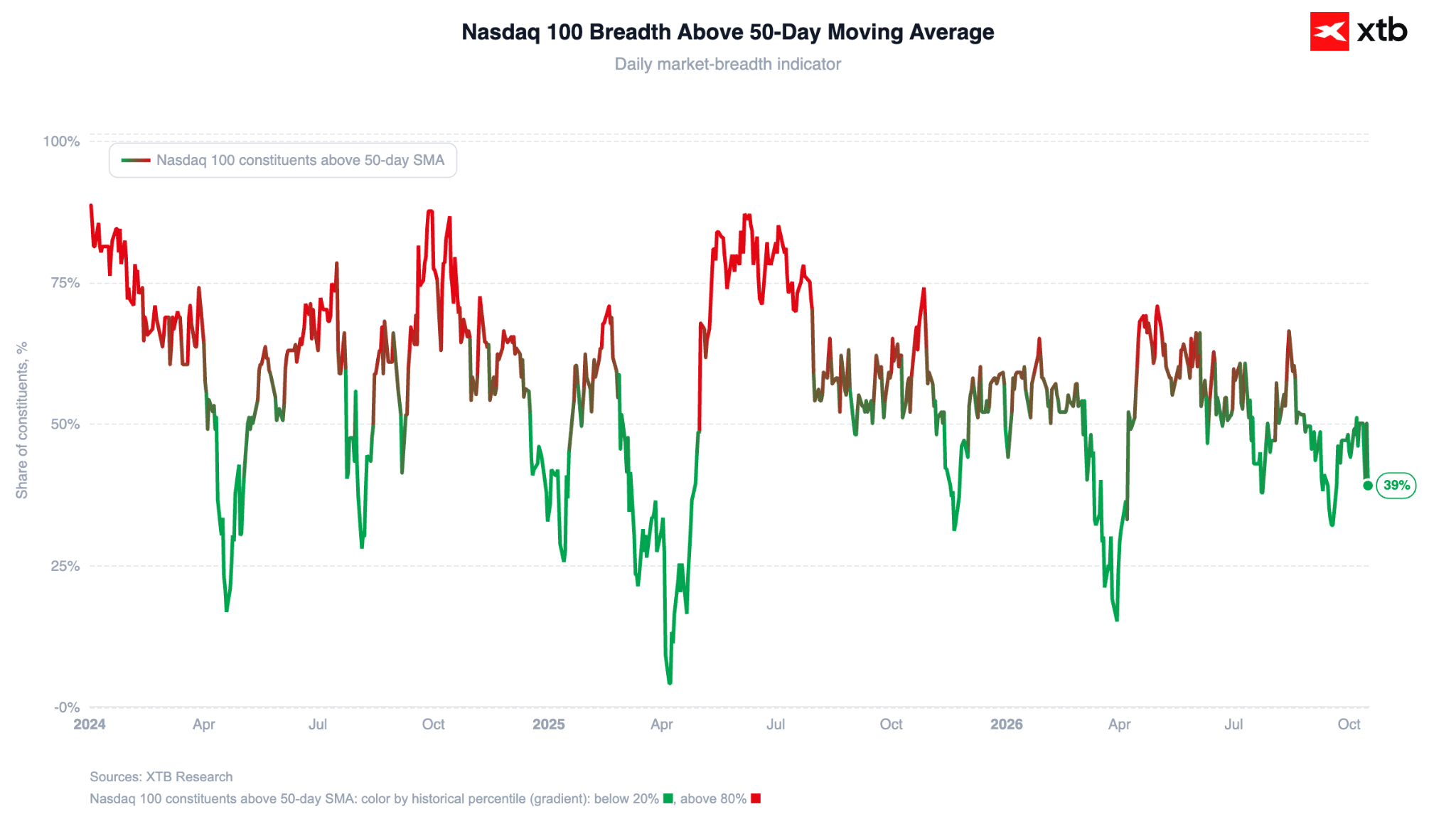
Source: XTB Research, 19.10.2026 Ahead of us lies the earnings releases from major US companies, which could determine the market’s future direction amid growing pressure on the AI bull market.
Nasdaq loses momentum
SOXX, the most popular semiconductor index, has just suffered its longest losing streak since 2008, while the VIX recorded its largest jump since June. Figure 2: Nasdaq 100 – Semiconductors (2026)
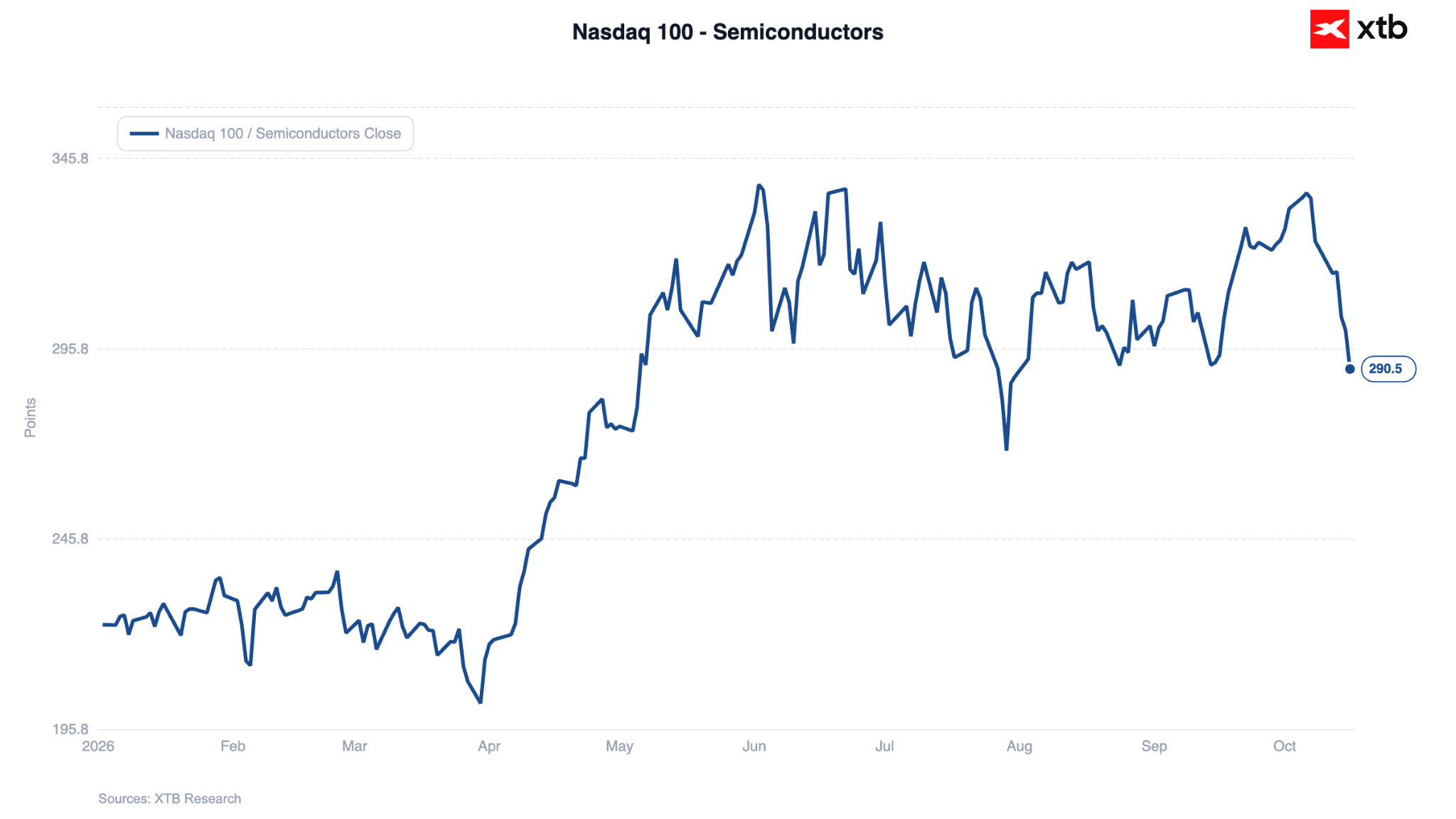
Source: XTB Research, 19.10.2026 At the core of last week’s sell-off were mounting concerns regarding the financing of AI infrastructure expansion, specifically the sustainability of the massive capital expenditure that has driven revenue and earnings across the sector. Also noteworthy was a significant rise in bond yields issued by CoreWeave, a cloud service provider in which Nvidia holds a major stake. Meanwhile, Nscale, another Nvidia-backed company, faced resistance over the valuation it is seeking in its planned IPO. Figure 3: Dashboard for CoreWeave (2024 – 2026)
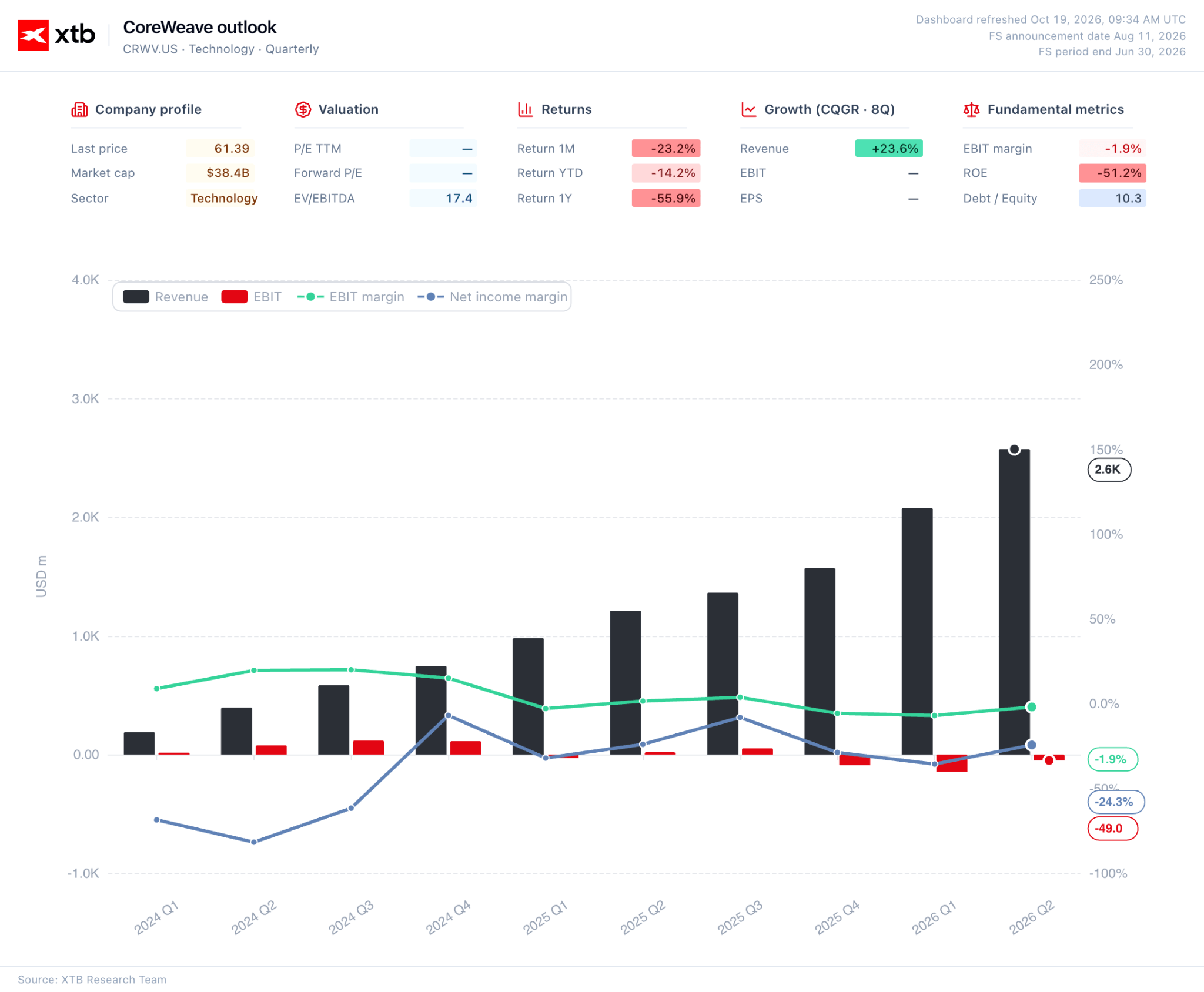
Source: XTB Research, 19.10.2026 Nvidia CEO Jensen Huang stated late last week that the current pullback will pass, encouraging investors to look beyond short-term headlines and focus on the long-term value of the technology. However, concerns were not assuaged by DeepSeek. Over the weekend, the Chinese firm unveiled its updated V4.1-Flash model, designed to operate faster and provide more concise responses, thereby consuming fewer resources per task. For a market that priced in the memory boom on the assumption of a virtually bottomless appetite for AI hardware, this is an uncomfortable signal.
Yields weigh on valuations
An additional burden came from the bond market. US 10-year Treasury yields surged past 5% in September, reaching their highest levels since 2002. Such elevated discount rates weigh heavily on growth stock valuations and heighten the index’s sensitivity to adverse news from the AI sector. Figure 4: Treasury Yields and Brent Crude Oil Prices (2026)
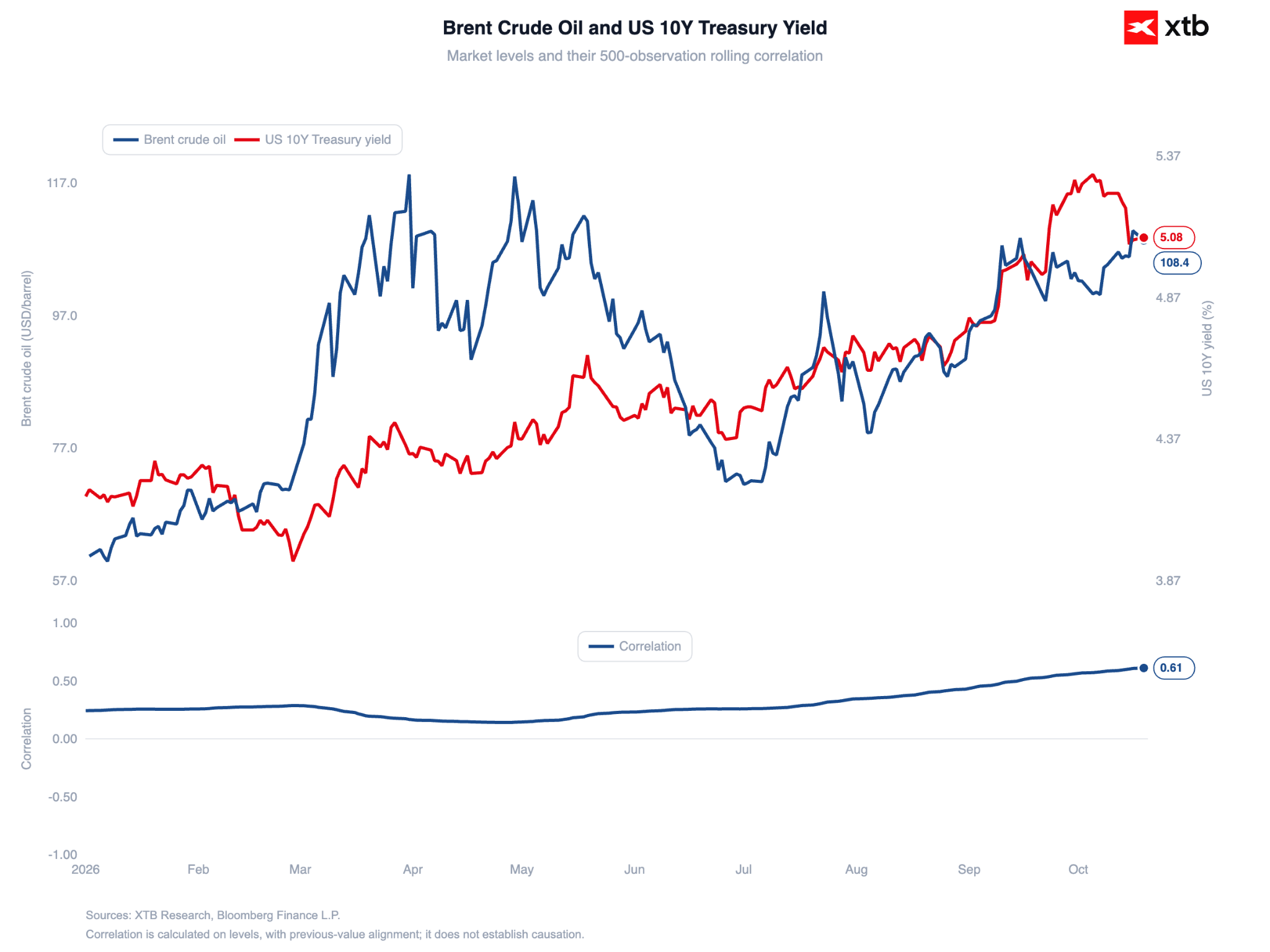
Source: XTB Research, 19.10.2026
Time for the tech giants
Whether last week’s sell-off was an overreaction or a serious warning signal will be decided by the quarterly reports scheduled from tech giants in the coming days. SpaceX and Netflix will report on Tuesday, followed on Wednesday by a crucial test for the sector when Tesla and Meta release their results. Market attention will focus primarily on the scale of hyperscalers’ capital expenditure and whether their astronomical spending on artificial intelligence is beginning to yield real returns. Meta, in particular, is emerging as the new bellwether of the AI rally. Table 1: Earnings Calendar for the Coming Week
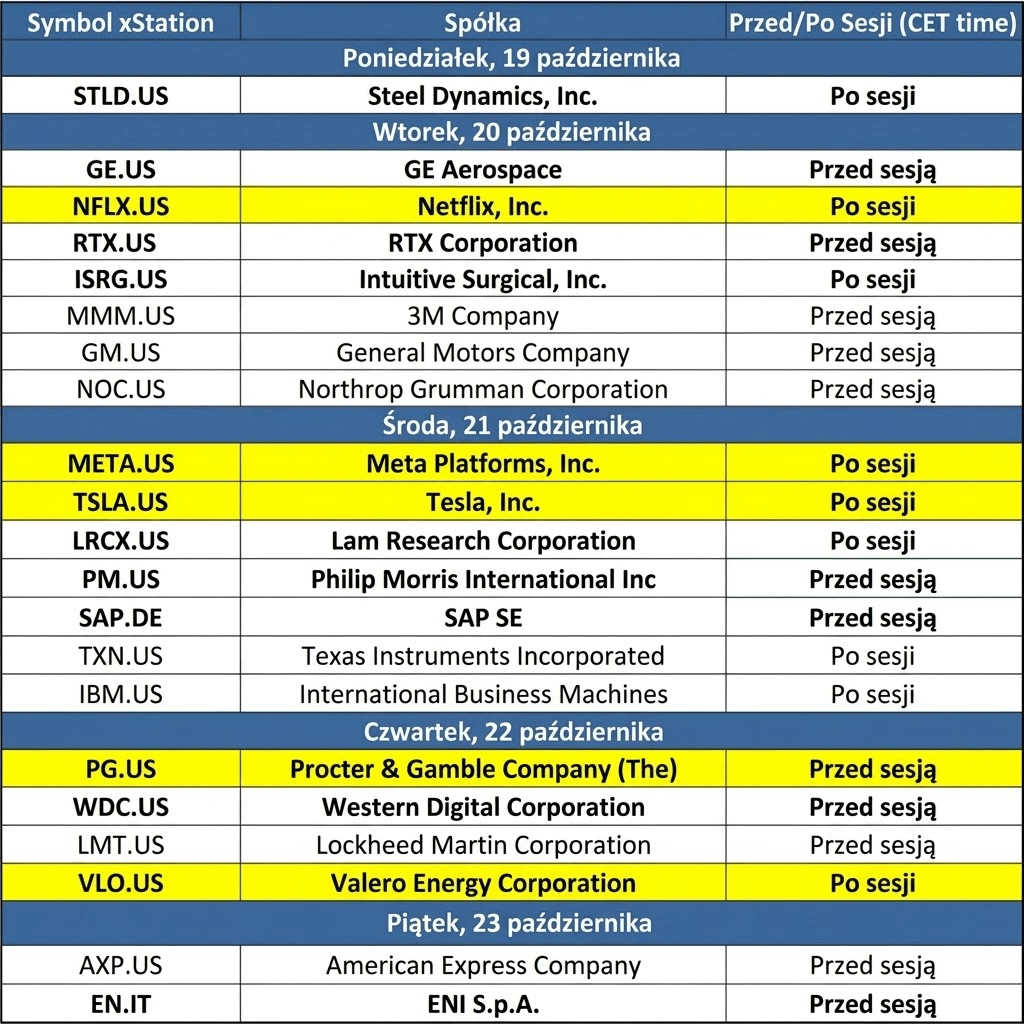
Source: XTB Research, 19.10.2026
Fed relieves pressure
In the background, monetary policy remains a key factor. A hotter-than-expected CPI reading failed to boost bets on an October interest rate hike. The market appears reluctant to price in a continuation of the tightening cycle at the upcoming meeting, assigning less than a 15% probability to such a scenario. Speaking at the annual IMF meeting, Federal Reserve Chair Kevin Warsh did not comment directly on future FOMC monetary policy actions or the US economic outlook, reiterating only that the Fed’s mandate is to ensure price stability. Figure 5: CPI Inflation and Wage Growth in the US (2024 – 2026)
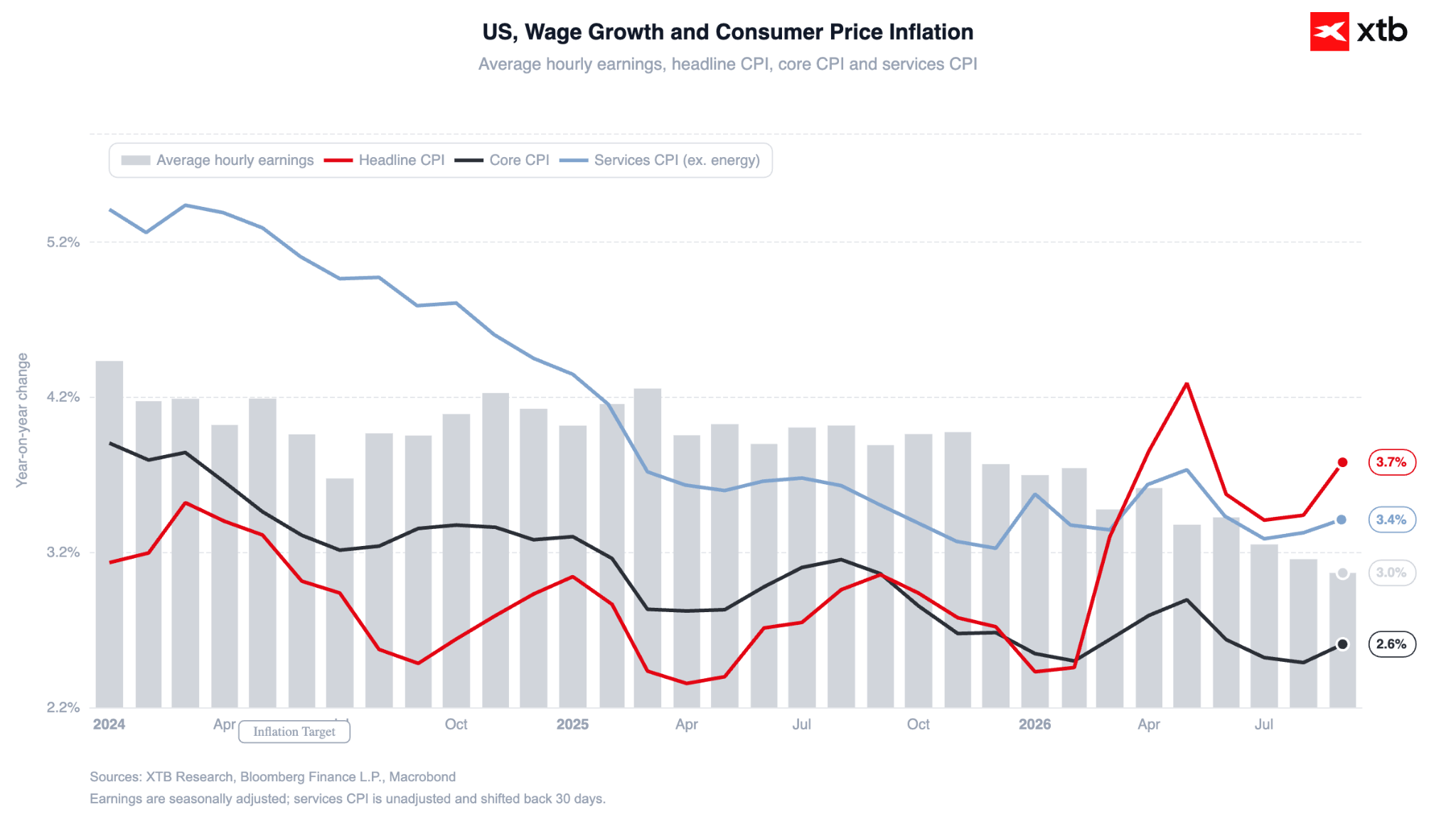
Source: XTB Research, 19.10.2026 Investors, however, continue to expect further tightening later this year, with a rate hike in December almost fully priced in.